


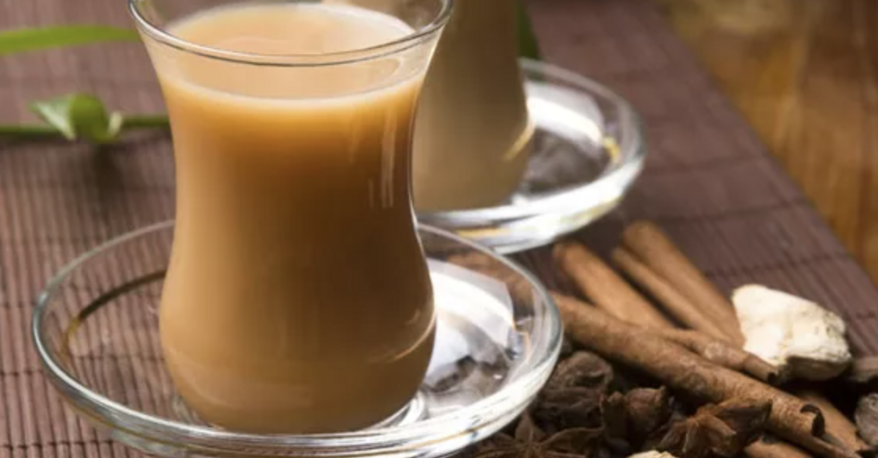
One of the aromas that people commonly associate with India is that of masala chai, with its captivating blend of cinnamon, nutmeg, and clove, leaving a lasting impression on the senses. In fact, its history is quite interesting and is connected to three different cultures – Chinese, British, and Indian. In ancient Vedic scriptures, one can read about the healing power of hot milk with herbs and spices, which strengthens the body and spirit.
According to one legend, the god Rama asked the son of the wind, Hanuman, to save his wounded brother. Hanuman then went to the Himalayas in search of a healing herb, but unable to find it, he uprooted the entire mountain. He then brought it to Rama, and thus, the tea shrub appeared in India. If we look at the historians’ version, tea actually comes from China in the early 19th century, with records of the British East India Company working in the Assam plateau. Today, this region produces both black and green tea for the whole world.
In Hindi, the word masala means “spice mix,” though it’s unclear exactly when people began adding these spices to hot milk. The classic version of masala uses black tea, but it can be replaced with green tea, rooibos, or you can simply boil the spice mix in water. In fact, in India there are almost as many different recipes for masala as there are dialects, but the basic ingredients are four: tea leaves, milk, sweetener (most often sugar), and spices. Here is what a recipe for a cup of masala chai looks like, which you can prepare instead of coffee in just 15 minutes:
Ingredients and preparation:
½ cup cow’s milk (or soy, nut, rice, etc.)
½ cup water
½ tsp loose black tea
¼ tsp sweetener (brown sugar, honey, or stevia)
½ tsp spice mix (cardamom, cinnamon, ginger, clove)
The first step in the Himalayan masala tea recipe is preparing the spice mix. The cardamom is crushed, and the amount should match that of the cinnamon, which, if in stick form, also needs to be well broken. Fresh ginger is best, but if unavailable, dry ginger can be used. Fresh ginger should be grated or chopped into small pieces, about half the amount of the cardamom. If using dry ginger, break it into small pieces. Add about 1–2 cloves per cup of tea. Optionally, you can also add coriander, finely crushed, and a bit of black pepper.
Place the water in a saucepan, add all the spices, and cover with a lid. Put the saucepan on the stove, and once it boils, leave it for 4–5 minutes. Then remove it from the heat and add the black tea. Let the tea steep for a few minutes, then strain.
Return the tea to the stove, add the milk and honey/sugar, then stir until dissolved.
The more milk added, the more nourishing and filling the tea becomes. However, if too much milk is used, it can increase mucus secretion in the lungs. Diluting with water and adding pungent spices like black pepper, ginger, and clove neutralizes this effect. Sweeteners, in turn, protect the mucous membrane from potential irritation caused by the astringent and spicy flavors. The stimulating effect of caffeine is balanced by a pinch of nutmeg and cardamom.
Interestingly, each spice in masala tea supports the human organ it visually resembles. Cinnamon resembles bones, so it helps the skeletal system by warming it. Nutmeg looks like the brain and is considered a very potent remedy. Cloves resemble red blood cells when viewed under a microscope. Cardamom, besides being highly aromatic and beneficial for the liver, can be chewed and is helpful for dental issues.


