

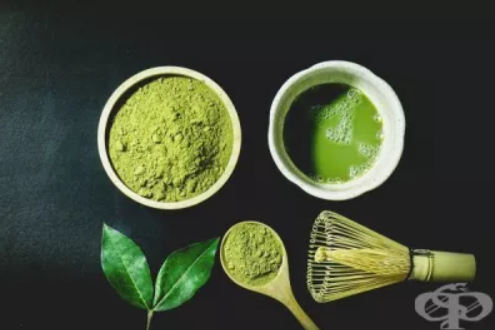
Matcha is a high-quality Japanese finely ground green tea with a centuries-old history, originating from the evergreen plant Camellia sinensis. The story of this ancient drink began over 800 years ago when the Buddhist monk Eisai brought the “elixir of life” from China and planted Matcha in the Land of the Rising Sun – Japan. While the Japanese have been drinking matcha for over 800 years (perhaps one reason they are among the healthiest nations), Western scientists are only now beginning to study this type of green tea and uncover its superpowers. Literally translated, Matcha means “powdered tea.”
This tea has been used for centuries by Zen Buddhists. As early as the 11th century, it was referred to as a true miracle of nature. Matcha is a special Japanese variety of green tea (Camellia sinensis) with a specific cultivation method. The tea plants are shaded just before harvesting, which increases their content of L-theanine, caffeine, and chlorophyll. After picking, the leaves are ground into a fine powder – the raw material for matcha is called tencha.
Matcha green tea is a natural superfood with a millennia-old history and a permanent place in traditional Asian culture and homeopathic medicine.
Every gram of this “samurai drink” contains an impressive amount of chlorophyll, fiber, vitamins, polyphenols, catechins, proteins, amino acids, organic acids, and antioxidants. The last ingredient, antioxidants, is especially highlighted as matcha’s main advantage over other green teas, since this emerald drink contains up to 137 times more antioxidants than ordinary green tea—and many times more than blueberries, spinach, or goji berries.
ORAC (Oxygen Radical Absorbance Capacity) is a method used to measure antioxidant content. Matcha’s ORAC rating is 1,370 units per gram, placing it at the top of the superfood scale. Antioxidants help neutralize chemicals called free radicals, produced during oxidation processes in the human body.
Numerous scientific studies have shown that, due to its properties and composition, matcha green tea surpasses all other so-called superfoods. It slows down cellular aging and protects against many diseases.
The main health benefit of matcha tea is that it delivers mega doses of antioxidants to the body with every sip. The antioxidants in one cup of matcha equal those in ten cups of any other brewed green tea. Antioxidants are chemical compounds that slow cellular aging and protect the body from illness. Simply put, the more you have, the better equipped your body is to fight off infections and disease.
Matcha tea contains high levels of the catechin EGCG (epigallocatechin gallate). These natural polyphenols are powerful antibacterial and antiviral agents, strengthen capillary walls, and help rid the body of toxic compounds. Many researchers believe that EGCG plays a positive role in the body’s fight against cancer.
According to nutritionists, EGCG is a must-have in every diet. It stimulates the production of the hormone norepinephrine, which boosts metabolism and promotes fat burning.
The composition of this powdered tea includes important components such as:
Epigallocatechin (EGCG): A very powerful antioxidant, even stronger than vitamin C and vitamin E. Matcha contains 100 times more of this compound than any other type of tea. Scientific evidence shows that EGCG slows aging, helps with weight loss, acts as a natural antibiotic, and may prevent cancer.
L-theanine: This element contributes to the production of serotonin and dopamine—two hormones that influence brain function and mood. They also affect alpha brain waves, promoting relaxation without causing drowsiness.
Caffeine: This component is also present in large amounts. But due to the presence of L-theanine, its absorption is slower, so the energizing effect is smoother and doesn’t increase blood pressure.
Matcha tea is considered the best natural detoxifier.
It contains a high amount of chlorophyll, which helps bind heavy metals and remove them from the body. It also cleanses the liver and speeds up metabolism.
Thanks to polyphenols, flavonoids, and other beneficial ingredients, matcha tea has an effect on the central nervous system. Specifically, it helps improve focus. In Japan, it is an integral part of many dietary supplements aimed at enhancing cognitive function.
Despite all its benefits, this drink has contraindications.
Because matcha is consumed as a suspension of powdered leaves rather than an infusion, the body receives a higher dose of antioxidants and other active components. These significantly amplify the body’s natural processes.
Matcha is not recommended for breastfeeding women, or people suffering from chronic gastritis or peptic ulcers, for the reasons mentioned above. In addition, it’s best not to drink matcha before bed, as it is highly stimulating.
How to Prepare Matcha Tea
You can prepare traditional matcha tea by sifting 1–2 teaspoons of matcha (about 2–4 grams) and adding 60 ml of hot water. Avoid using metal utensils and containers.
If the drink is too strong for your taste, you can adjust the amount of tea and water according to your preference.
Be mindful of the dosage—although the tea is highly beneficial, it is recommended to drink no more than 1–2 cups per day.
You can also add matcha to various desserts, creams, or puddings—in these cases, use about 1 teaspoon of matcha powder.


