Breathing Exercises
Discover effective breathing techniques for stress relief—including belly breathing, 4-7-8, and SKY Breath Meditation—for calm, balance, and better sleep.

Updated on: 7th October 2025
Posted on: 6th October 2025
Stress is universal. Whether from looming deadlines, financial worries, or the constant buzz of notifications, today’s pace of life keeps us in a perpetual state of “fight-or-flight.” This stress response, once adaptive in helping our ancestors escape predators, is now chronically triggered by non-life-threatening demands. The result? A steady rise in conditions such as insomnia, high blood pressure, https://www.artofliving.org/us-en/blog/anxiety, and burnout.
One of the clearest indicators of stress is shallow, rapid breathing. This chest-based breathing signals danger to the nervous system, keeping the body locked in a state of tension. Conversely, slow and intentional breathing signals safety, allowing the body to transition into a state of relaxation. In other words, our breath is both a symptom and a solution for stress.
Long before science measured hormones and brain waves, cultures worldwide recognized the transformative power of breath.
Across civilizations, breath was never seen as mere air exchange—it was understood as the gateway to vitality, healing, and higher consciousness.
While the West once viewed breathing only as a mechanical process, research over the last 50 years has confirmed what ancient traditions intuited—how we breathe directly shapes our mental, emotional, and physical health.
Studies show that slow, deep breathing activates the parasympathetic nervous system, counteracting the stress-driven sympathetic response. This shift lowers cortisol levels and promotes relaxation.
Neuroscientific research has found that controlled breathing modulates activity in the amygdala (the brain’s fear center) and enhances prefrontal cortex function (responsible for focus and decision-making). EEG studies reveal that slow, rhythmic breathing induces alpha and theta brain waves, states associated with relaxation and creativity.
Clinical studies have reported that regular breathing exercises lower blood pressure and improve heart rate variability (HRV), a key indicator of resilience. Some research also shows that breathing practices enhance immune cell activity and antioxidant defenses.
Among the most widely researched breath-based practices is SKY Breath Meditation (Sudarshan Kriya Yoga), taught in the Art of Living Part 1 Course. Over 100 independent studies conducted at institutions including Harvard Medical School, Yale, and Stanford University have shown that SKY:
This scientific validation positions SKY at the intersection of ancient wisdom and modern neuroscience—a comprehensive system of breathing designed to address the challenges of contemporary life.
Breathing has unique advantages over other stress management techniques:
In this article, we’ll explore:
By the end, you’ll not only understand why breathing is such a powerful stress-relief tool, but also how to practice it daily to unlock balance, clarity, and calm.
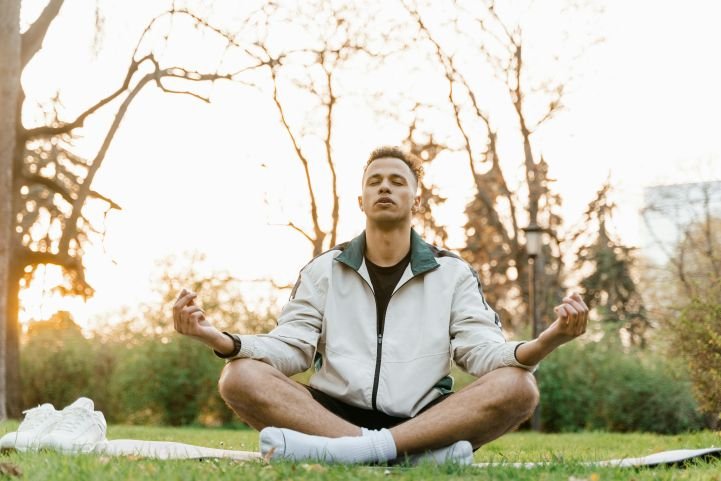
Breathing techniques are structured, intentional ways of controlling the breath to influence the body, mind, and emotions. Unlike unconscious breathing, which occurs automatically, breathing techniques involve mindful awareness of the inhale and exhale, often combined with rhythm, duration, or control of the nostrils. The aim is not only to supply oxygen to the body but to regulate energy, calm the nervous system, and even transform emotional states.
Breathing is unique because it is both voluntary and involuntary. Our heartbeats and digestion are automatic, yet our breath can be consciously regulated. This dual nature gives us a rare lever: through our breath, we can directly influence otherwise automatic processes, such as heart rate, blood pressure, and hormone secretion.
For example, when breathing is rapid and shallow, the sympathetic nervous system, also known as the “fight-or-flight” response, is activated. When breathing is deep, slow, and rhythmic, the parasympathetic nervous system, also known as the “rest-and-digest” system, takes over, restoring calm and balance.
This is why practices as old as yoga emphasize pranayama—not simply as a respiratory exercise, but as a way to balance life energy (prana) and still the fluctuations of the mind.
Breathing exercises are now recognized as evidence-based interventions. Research in Frontiers in Human Neuroscience (Zaccaro et al., 2018) found that slow breathing has a positive influence on heart rate, stress hormones, and brain activity. Another study in Harvard Health (2020) highlighted breath control as one of the simplest and most effective ways to quell the stress response.
By practicing regularly, individuals not only improve physical health but also create a psychological toolkit for handling daily challenges with greater clarity and calm.
The benefits of breathing practices extend far beyond momentary relaxation. With regular practice, breathing techniques enhance physical health, emotional balance, cognitive performance, and spiritual growth.
Breathing practices are one of the fastest ways to reduce stress. They work by stimulating the vagus nerve and increasing parasympathetic activity. This calms the amygdala (the fear center in the brain) and helps regulate emotional responses.
Study Insight: A 2017 paper in Frontiers in Psychology showed that diaphragmatic breathing reduced cortisol levels and improved focus and mood in just 20 minutes.
Practical benefit: Instead of reacting impulsively to stressors, you learn to pause, breathe, and respond with clarity.
Racing thoughts and an overstimulated nervous system often fuel insomnia and restless sleep. Techniques like 4-7-8 breathing and SKY Breath Meditation are shown to slow the heart rate, quiet the mind, and increase melatonin production, helping people fall asleep faster and stay asleep longer.
Study Insight: The Journal of Clinical Psychology reported that slow breathing interventions significantly improved insomnia symptoms and sleep duration.
Hypertension is a leading risk factor for cardiovascular disease. Slow breathing has been shown to widen blood vessels, reduce vascular resistance, and lower blood pressure.
Study Insight: The American Heart Association endorses slow breathing as an adjunct for blood pressure management, noting improvements in systolic and diastolic levels.
Breathing practices expand lung capacity and strengthen respiratory muscles, making them especially beneficial for sedentary individuals, athletes, and those recovering from illness. An increased oxygen supply enhances mental alertness, physical stamina, and cellular energy production.
Study insight: SKY Breath Meditation has also been studied for its impact on oxygenation. A study at the All India Institute of Medical Sciences reported that regular SKY practice improved oxygen consumption efficiency and increased energy levels in practitioners.
Breath practices sharpen focus and reduce mental fog. By increasing oxygen supply to the brain and calming overactive thought patterns, breathing supports concentration, creativity, and problem-solving.
Study Insight: A Yale University study on SKY Breath Meditation found that participants experienced improved clarity of thought and reduced mind-wandering.
Chronic stress suppresses immune function. By reducing stress markers and improving antioxidant defenses, breathing techniques strengthen the immune system and reduce systemic inflammation.
Study insight: Research published in the Annals of the New York Academy of Sciences demonstrated that rhythmic breathing practices, such as SKY, improved immune cell counts and enhanced resilience in tobacco users.
Beyond short-term stress relief, regular breathing practice builds resilience—the ability to adapt and recover quickly from challenges. Longitudinal studies on SKY Breath Meditation show sustained increases in optimism, positive emotions, and overall life satisfaction.
Practical benefit: Breathing doesn’t just help in moments of stress—it rewires the nervous system to remain calmer in everyday life.
Study insight: Research at Yale University on SKY Breath Meditation revealed sustained reductions in anxiety and depression, with benefits persisting even three months after the intervention (Seppälä et al., 2020).
While individual techniques like belly breathing or alternate nostril breathing are helpful, structured programs like the Art of Living Part 1 Course offer SKY Breath Meditation as a comprehensive system. With rhythmic breathing patterns supported by meditation and wisdom, SKY delivers holistic benefits that extend far beyond stress relief.
In a world where stress is constant and external factors are often beyond our control, breathing practices offer a simple, portable, and powerful solution. They:
Most importantly, they remind us that inner calm is not dependent on circumstances—it is accessible anytime, through the simple act of conscious breathing.

Breathing is the most direct and accessible way to influence the body’s stress response. While diet, exercise, and therapy all support mental health, breathing works instantly by altering the nervous system in real time.
When stress hits, the body releases cortisol and adrenaline—hormones that prepare us to fight or flee. While useful in emergencies, chronic elevations of these hormones lead to anxiety, poor sleep, and weakened immunity.
Research insight: A study in the Journal of Alternative and Complementary Medicine found that participants practicing SKY Breath Meditation showed significant reductions in cortisol levels after just two weeks.
HRV—the variation in time between heartbeats—is a key measure of resilience. High HRV indicates the body can adapt quickly to stress; low HRV is linked to anxiety, depression, and cardiovascular disease.
Research insight: A study published in Frontiers in Human Neuroscience (Zaccaro et al., 2018) found that slow breathing practices consistently enhanced HRV across multiple studies.
An overactive nervous system is one of the most significant barriers to restful sleep. Racing thoughts, shallow breathing, and elevated cortisol keep the body alert.
Research Insight: A clinical trial published in the Journal of Clinical Psychology found that participants who practiced breathing-based meditation experienced significant reductions in insomnia symptoms and improved sleep efficiency.
Breathing gives us space between stimulus and response. Instead of reacting impulsively with anger, fear, or anxiety, conscious breathing slows the nervous system and activates the prefrontal cortex—the “thinking brain.”
Research Insight: Yale University studies on SKY Breath Meditation found improvements in emotional regulation and significant decreases in symptoms of anxiety and depression among students.
Constant distractions, mental chatter, and worry deplete cognitive resources. Breath-centered practices sharpen focus by anchoring attention on the present.
Research insight: EEG studies indicate that slow breathing increases alpha brain waves, which are associated with calm alertness and mental clarity.
Unlike quick fixes, regular breathing practice rewires the nervous system to handle stress more effectively over time. With consistency, baseline cortisol levels drop, HRV improves, and stressors no longer feel overwhelming.
Research insight: Longitudinal studies on SKY Breath Meditation show sustained increases in optimism, life satisfaction, and social connection even months after training.
Breathing exercises can be used in countless scenarios:
Ultimately, breathing exercises are not only about stress management. They provide a foundational tool for emotional well-being, mental clarity, and spiritual growth. Practices like SKY go beyond immediate relief, creating deep shifts in how we experience ourselves and the world.
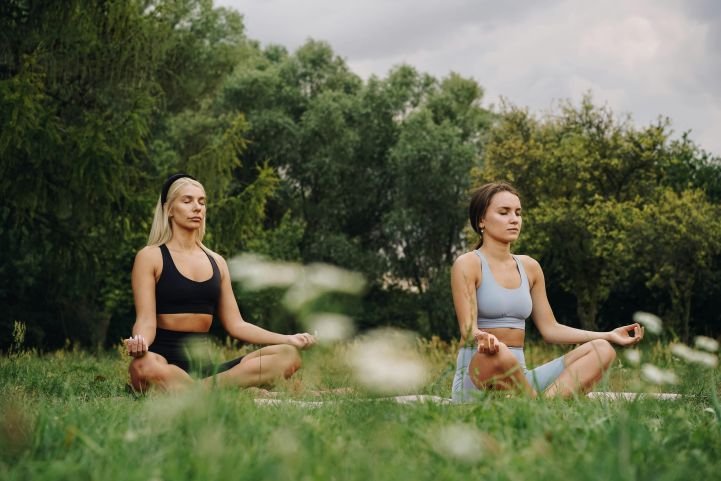
Deep breathing, also known as abdominal or diaphragmatic breathing, is one of the most fundamental and powerful techniques for stress relief. It involves consciously engaging the diaphragm—the dome-shaped muscle beneath the lungs—to expand the chest cavity fully.
Most people breathe shallowly, using only the upper part of their chest. This limits oxygen intake, keeping the body in a state of low-level stress. Deep breathing reverses this pattern by:
When practiced regularly, deep breathing trains the body to return to a healthier, more efficient pattern naturally.
Research Insight: A 2017 study published in Frontiers in Psychology demonstrated that diaphragmatic breathing reduced cortisol levels, improved attention, and enhanced working memory performance.
Deep breathing also has a profound impact on mental health:
Research Insight: Jerath et al. (2006) proposed that long, deep pranayamic breathing helps synchronize brain networks, explaining its calming and mood-enhancing effects
Deep breathing can be integrated anywhere:
Over time, it becomes second nature—a default response to tension or anxiety.
Deep breathing is the foundation of more advanced techniques:
In this way, deep breathing is both a standalone technique and a gateway to more structured practices.
With constant stress, shallow breathing has become the norm for many. Learning to breathe deeply is like retraining the body for calm. It not only reverses the effects of stress but also builds resilience and emotional steadiness for the long term.
Also known as diaphragmatic breathing, belly breathing is one of the most accessible techniques for stress relief.
Tip: Place one hand on your chest and the other on your belly. Breathe in so that only the belly-hand rises, not the chest-hand.
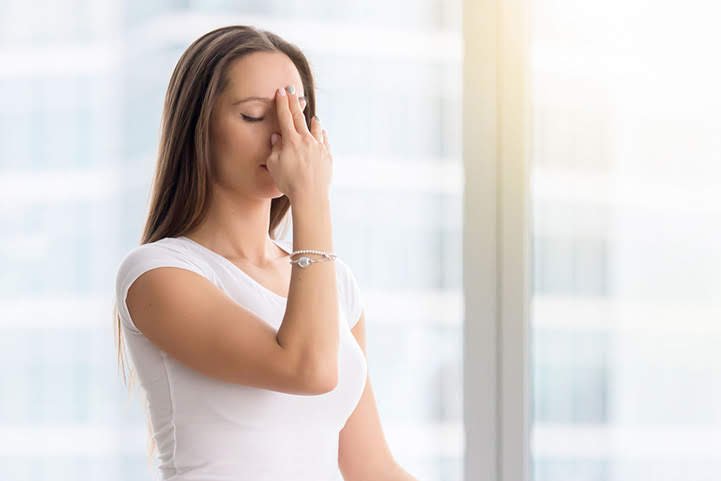
A cornerstone of yoga, alternate nostril breathing creates balance between the body’s right (energizing) and left (calming) channels.
This cycle is one round. Practice 5–10 rounds daily.
Popularized by Dr. Andrew Weil, 4-7-8 breathing is nicknamed the “relaxing breath.”
Repeat up to four cycles.
Breaks patterns of racing thoughts
Abdominal breathing emphasizes slow expansion of the lower belly. It’s particularly effective for those who unconsciously breathe shallowly due to stress.
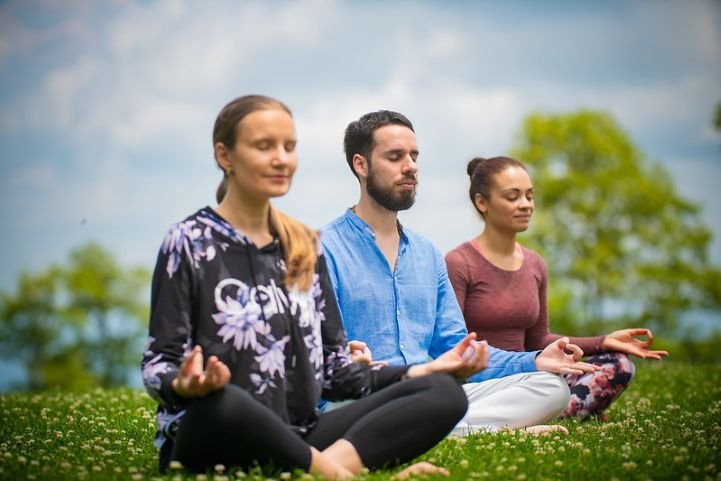
Meditation is often described as the art of returning the mind to the present moment. Yet for many beginners, sitting still can feel daunting. This is where breath-focused meditation techniques become invaluable. By using the natural rhythm of breathing as an anchor, the mind is gently guided away from distractions, stress, and overthinking, and toward clarity, peace, and a state of balance.
Unlike more abstract meditation practices, breath-focused techniques are concrete and immediately accessible. The breath is always with us, and by learning to observe, count, or synchronize it, we can enter a meditative state almost anywhere, at any time.
The breath is unique because it is both automatic and controllable. This duality makes it the ideal bridge between the body and the mind. While emotions, thoughts, and external circumstances fluctuate wildly, the breath is steady and constant. By training attention on this rhythm, we:
Many spiritual traditions—from Buddhism’s anapanasati (mindfulness of breathing) to yoga’s pranayama—have recognized the breath as a direct pathway to mindfulness and transcendence.
Breath-centered meditation is not just a spiritual practice; it is increasingly recognized by neuroscience and psychology as a powerful therapeutic tool.
Unlike longer, more complex meditation programs, breath-focused practices can be as short as 2–10 minutes, making them easy to weave into daily routines.
Breath-focused meditation techniques remind us that stillness is just a breath away. Whether through mindful observation, simple counting, or the structured rhythms of SKY, the breath provides a doorway to calm, clarity, and balance.
In a world filled with distractions and pressures, these techniques offer an anchor—simple enough for beginners, powerful enough for advanced practitioners, and scientifically validated for real results.

The best breathing practice is the one you’ll actually do consistently. Here are ways to bring it into daily life:
With practice, breathing becomes a natural reflex for calming stress.
While individual techniques, such as belly breathing, alternate nostril breathing, or the 4-7-8 breathing method, can provide immediate stress relief, they are often practiced in isolation. SKY Breath Meditation (Sudarshan Kriya Yoga) offers something unique: a complete, structured system of rhythmic breathing that not only reduces stress but also transforms emotional patterns and enhances overall well-being.
SKY is a powerful breath-based meditation technique taught in the Art of Living Part 1 Course, created by world-renowned humanitarian and spiritual teacher Gurudev Sri Sri Ravi Shankar.
The practice consists of a carefully designed sequence of rhythmic breathing cycles. This sequence helps practitioners move beyond surface-level relaxation and into profound states of inner peace. Unlike techniques that require intense focus or years of practice, SKY can be learned in just a few sessions with certified instructors and delivers benefits from the very first day.
What sets SKY apart is its strong scientific foundation. More than 100 independent studies, published in peer-reviewed journals and conducted at top institutions like Harvard, Yale, Stanford, the University of Arizona, and the National Institutes of Health, have documented its benefits.
A study in the Journal of Clinical Psychiatry found that SKY significantly reduced cortisol levels, the body’s primary stress hormone. Participants reported feeling calmer, more grounded, and less reactive to daily challenges.
Anxiety and Depression: Research at Yale University and the University of Arizona found that SKY decreased symptoms of anxiety and depression, even among populations who did not respond to medication.
PTSD Relief: A study published in the Journal of Traumatic Stress (Seppälä et al., 2014) showed that U.S. veterans practicing SKY experienced dramatic reductions in PTSD symptoms, improved sleep, and increased emotional stability.
Research using EEG scans revealed that SKY practitioners exhibited brain-wave patterns associated with calm alertness and deep meditation. Long-term practice has been linked to greater resilience, improved clarity of thought, and reduced mind wandering.
Studies in the Annals of the New York Academy of Sciences documented that SKY improves immune cell counts and antioxidant levels, strengthening the body’s defenses against illness.
Unlike quick fixes, SKY creates long-term neuroplastic changes. Practitioners report greater optimism, stronger social connections, and the ability to bounce back from challenges with ease.
Learning SKY Breath Meditation is more than learning a technique—it is an immersive experience. In the Art of Living Part 1 Course, participants are guided through:
This holistic approach makes SKY not just a stress-relief tool but a transformational journey toward greater resilience, joy, and self-awareness.
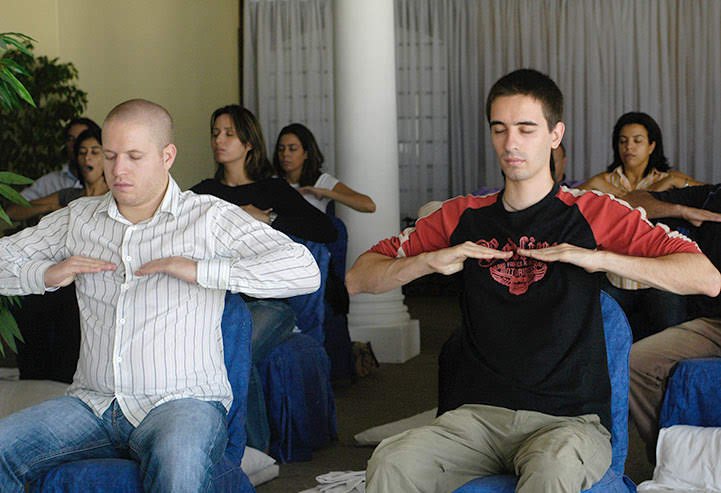
We often think of stress as something external—such as work demands, family responsibilities, or financial worries. But stress is not what happens outside of us—it is our body’s and mind’s response to those events. And the key to shifting that response lies within our own breath.
Throughout this article, we explored a variety of breathing practices:
Each of these practices offers profound benefits in its own right. But together, they point to a larger truth: our breath is the most powerful and accessible tool for transforming stress into peace.
Basic breathing techniques offer immediate relief. They help us feel calmer before an exam, during a difficult conversation, or as we prepare to fall asleep. However, practices like SKY Breath Meditation take this further, creating lasting shifts in emotional resilience, cognitive clarity, and overall well-being.
Research from Harvard, Yale, and Stanford shows that SKY not only lowers cortisol and anxiety but also enhances immune function, fosters optimism, and aids in recovery from trauma. It is more than stress relief—it is a path to transformation.
We live in an age of constant stimulation, where stress is normalized and rest is undervalued. Silent retreats, mindfulness, and yoga have gained popularity as people seek ways to reconnect with themselves and their inner selves. Breathing stands out because it is:
Most importantly, breathing empowers us to stop outsourcing peace of mind to external circumstances. It reminds us that calm is not found “out there” but cultivated within.
✅ Breathing is the fastest way to reduce stress. Techniques such as deep breathing, belly breathing, and alternate nostril breathing can quickly calm the nervous system.
✅ Science backs breathwork. Research shows breathing reduces cortisol, improves heart rate variability (HRV), lowers blood pressure, and enhances sleep quality.
✅ Breath-focused meditation is powerful. Anchoring the mind in the breath reduces overthinking, increases focus, and builds emotional resilience.
✅ SKY Breath Meditation goes deeper. Backed by studies from Harvard, Yale, and Stanford, SKY reduces anxiety, depression, and PTSD, while boosting immunity and well-being.
✅ Breathing is always available. No equipment, cost, or special setting needed—you carry the most effective stress-relief tool within you, every moment of the day.
🔑 Quick action steps

Ready to go beyond stress management and experience lasting transformation?
The Art of Living Part 1 Course teaches SKY Breath Meditation in a guided, immersive setting. In just a few days, you’ll learn life-changing techniques for inner peace, resilience, and joy.
👉 Join the Art of Living Part 1 Course today and discover how your breath can change your life.
Q: How long should I practice breathing exercises each day?
A: Even 5–10 minutes daily brings noticeable benefits. Longer sessions deepen results.
Q: Can breathing techniques replace therapy or medication?
A: They are supportive tools, not substitutes. Always consult a healthcare provider before adjusting your treatment.
Q: Is SKY Breath Meditation safe for beginners?
A: Yes. It is taught step by step by certified Art of Living instructors.
Q: Which breathing technique is best for sleep?
A: Both 4-7-8 breathing and SKY have been shown to improve sleep quality.
Q: Can I practice breathing at work?
A: Absolutely—techniques like belly breathing can be done discreetly at your desk.