

Spirituality
Sankalpa is a sacred intention rooted in yoga philosophy. Explore its meaning, benefits, and how to create a sankalpa aligned with your true self.

Updated on: 6th January 2026
Posted on: 13th October 2025
Sankalpa is more than an intention—it is a sacred vow, a commitment to your highest truth. Sankalpa is a Sanskrit term that holds deep significance in yogic philosophy, representing a heartfelt desire or vow rooted in spiritual affirmation and personal transformation. Rooted in ancient yogic and Sanskrit wisdom, the word sankalpa combines san (a connection with the highest truth) and kalpa (a vow or rule to be followed above all others). Unlike ordinary resolutions that often emerge from the surface mind or fleeting desire, a sankalpa arises from the heart’s deepest longing—the quiet, unwavering voice within that knows your true purpose.
In the Art of Living tradition, sankalpa is not a mental exercise of willpower but a conscious alignment with the universal intelligence that governs life. Sankalpa means a deeply transformative mental intention or resolution, used in Yoga Nidra practice to sow the seeds of personal and spiritual change through repeated affirmations. Through practices like Yoga Nidra, SKY Breath Meditation, and Sahaj Samadhi Meditation, one learns to still the mind and listen inwardly. It is in this deep silence that your authentic sankalpa reveals itself—not as something to chase, but as something to remember.
When you set a sankalpa, you are not creating a new version of yourself; you are awakening the truth that already exists within. A sankalpa is expressed as a clear, intentional statement of your deepest desire or purpose, serving as a guiding affirmation aligned with your higher self.

In Sanskrit, sankalpa literally means “a vow, a firm intention, or will.” Yet in yoga philosophy, it signifies something far deeper—a sacred determination that unites thought, word, and action toward one’s highest purpose.
Sankalpa is also closely connected to the teachings of Advaita Vedanta, emphasizing non-dual awareness and the unity of the Divine within, guiding practitioners toward a realization of oneness.
This ancient practice acknowledges that true transformation begins not with outer striving but with inner clarity. Sankalpa bridges the conscious and subconscious mind, helping you channel your energy into alignment with your dharma—your unique purpose and truth. The idea of purpose or dharma serves as a guiding insight, shaping your intentions and actions on the spiritual path.
In the Art of Living approach, sankalpa integrates three natural forces present in every individual: the power of will (iccha shakti), the power of action (kriya shakti), and the power of wisdom (jnana shakti). This includes iccha as intrinsic motivation and willpower. These forces represent different aspects of the self that must be understood and harmonized to fulfill your purpose. When these are in harmony, intention becomes a living energy that guides your choices, strengthens your awareness, and leads you toward self-realization.
Whether through breathwork, meditation, or mindful living, sankalpa acts as the seed of spiritual evolution—a seed nourished by awareness and grace.
The integration of sankalpa into Yoga Nidra classes unlocks a powerful pathway to self-discovery and transformation. This ancient practice, rooted in the wisdom of yoga, invites you to set a heartfelt desire or intention while in a state of deep relaxation. When you repeat your sankalpa in the present tense during Yoga Nidra, you create a direct connection to your highest truth and deepest desires, allowing your intention to take root at the very core of your being.
Practicing sankalpa in Yoga Nidra offers a unique opportunity to access your true nature. In these relaxed states, the mind becomes quiet and receptive, making it easier to clarify your resolve and strengthen your awareness. This process not only helps you connect with your deeper purpose but also nourishes your sense of self-love and confidence. By affirming your intention with clear, positive words, you begin to shape your life from a place of wisdom, energy, and conscious choice.
One of the most profound benefits of this practice is the cultivation of tremendous will and inner power. As clinical psychologist Richard Miller explains, a true sankalpa arrives with all the qualities needed to fully realize it: iccha (tremendous will and energy), kriya (the ability to take action), and jnana (the wisdom to guide that action). By tapping into these three qualities, you reinforce your connection to your heart’s desire and empower yourself to create meaningful transformation in your life.
Beyond spiritual growth, sankalpa in yoga nidra can have a positive impact on your physical and mental health. The deep relaxation experienced in yoga nidra helps reduce stress and anxiety, leading to improved sleep and a greater sense of calm. As you become more aware of your intentions and choices, you gain a deeper sense of control and clarity, which can enhance your overall well-being.
Ultimately, the practice of sankalpa in Yoga Nidra is a powerful tool for nourishing your resolve and living with greater purpose. Whether you seek to strengthen your self-love, improve your health, or simply experience more peace and joy, this practice offers a profound way to connect with your true nature and fully realize your heartfelt desires. By making sankalpa a regular part of your yoga nidra practice, you invite lasting transformation and a deeper sense of fulfillment into your life.

To create a sankalpa, begin by listening—not to your mind’s noise, but to your heart’s quiet knowing. In a meditative state or after a session of SKY Breath Meditation, when the mind is calm and centered, ask yourself:
“What is my deepest intention? What does my heart truly long for?”
A true sankalpa arises from your heart’s desire, reflecting your innermost call rather than superficial or conditioned wants.
The answer will not come from effort but from awareness. It may emerge as a feeling, a phrase, or a sense of direction.
When forming your sankalpa, keep it:
Unlike New Year’s resolutions driven by pressure to change, a sankalpa arises from your soul’s remembrance of wholeness. While traditional ways to set goals often emphasize external outcomes, sankalpa invites a deeper, more meaningful approach rooted in inner truth. You are not trying to fix yourself—you are remembering who you already are.
The most powerful time to repeat your sankalpa is when your consciousness hovers between wakefulness and sleep—during Yoga Nidra or deep meditation. In this state, the mind is open and receptive, and the seed of intention can take root in the fertile soil of the subconscious. The beginning of your practice is an ideal moment to set your sankalpa, as it plants the intention for the session ahead.
Begin your Yoga Nidra practice by silently and repeatedly affirming your sankalpa three times with full awareness and feeling. Feel it as already true. Sense or visualize your sankalpa in your body, allowing the intention to be embodied and deepen your connection to it. At the end of your session, repeat it again, allowing gratitude and conviction to strengthen its vibration.
You can also integrate your sankalpa throughout the day—while pausing between tasks, before eating, or during moments of challenge. Each repeated affirmation becomes an act of alignment.
Through breathwork and meditation, you calm the turbulence of thought, allowing your sankalpa to radiate with the quiet power of truth. Aligning with the present moment during your sankalpa practice enhances its effectiveness and deepens your commitment.
Every spiritual journey meets resistance—old patterns, doubts, or conditioning that pull us back into the familiar. Often, we get stuck by focusing on what is wrong, which can hinder progress and keep us trapped in cycles of self-criticism. Sankalpa practice helps you break these cycles by consciously redirecting thought and energy toward growth, shifting your perspective from fixing flaws to cultivating awareness and acceptance.
When challenges arise, recall your sankalpa. Close your eyes, take a deep breath, and reconnect with your intention. You might silently repeat:
“I am steady in my purpose.” “I am guided by love.”
This repetition trains the nervous system to respond with presence rather than reactivity. It transforms challenges into opportunities for self-awareness.
In Art of Living teachings, sankalpa is supported by abhyasa (steady practice) and vairagya (non-attachment). Together, they create a balance of effort and surrender—strengthening your ability to move through life’s changes without losing sight of your truth. By following this path guided by sankalpa and intention, you align with your deeper purpose and foster meaningful transformation.
A sankalpa is not a one-time affirmation—it is a living vibration that needs nourishment. Every choice you make can either strengthen or weaken that vibration.
To nourish your sankalpa:
This continuous awareness refines your willpower (iccha shakti) and deepens your wisdom (jnana shakti), helping you live from integrity and grace.
As you repeat your sankalpa daily, it becomes not just a phrase, but a frequency—a sacred rhythm that tunes your life toward harmony and fulfillment. The energy of your sankalpa lives within you, shaping your daily experience and awakening your highest potential.

The ultimate purpose of sankalpa is action—kriya shakti, the energy of doing. When your sankalpa becomes the guiding principle behind your choices, even small actions acquire spiritual depth. Through sankalpa, you can achieve spiritual or personal goals by aligning your intentions with your highest purpose.
This might mean choosing compassion in a conversation, mindfulness in eating, or gratitude during a challenge. Over time, your life becomes a reflection of your inner resolve, as sankalpa informs your actions and choices, guiding you toward fulfillment.
To strengthen this integration:
Transformation is not about control but about coherence—living from the harmony between your inner truth and outer action. By practicing sankalpa, you not only nurture spiritual growth but also open the door to success and fulfillment in the world.
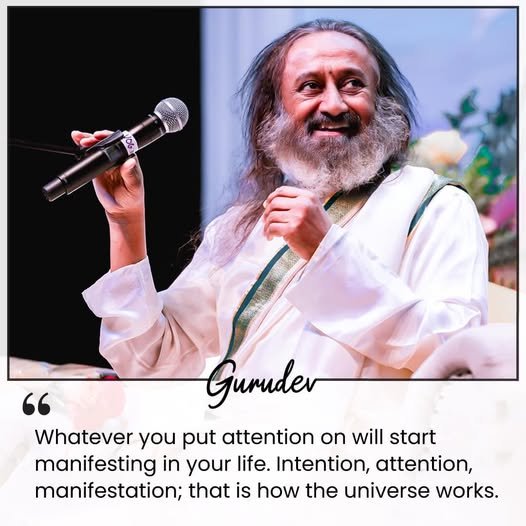
Your sankalpa is your compass—it reminds you of who you are and what you are here to embody. While traditional New Year’s resolutions often focus on the two words “I will,” sankalpa invites a deeper intention rooted in self-awareness and alignment with a higher purpose. Through consistent practice, your intention transforms from a thought into a living expression of your highest potential.
In the Art of Living approach, this journey is supported by powerful tools that purify the mind and strengthen intention:
For example, a goal like losing weight can shift from a surface-level desire to a heartfelt sankalpa by exploring the emotional and spiritual motivations behind it, using practices like meditation and reflection.
Together, these practices help you access the silence where your sankalpa takes root and blossoms.
Take a moment today—pause, breathe, and listen inward. What truth is your heart whispering? Let that become your sankalpa. Then live it, breathe it, and let it unfold through every act of your day.
Your sankalpa is the seed of transformation — but like every seed, it needs the right conditions to grow. The Art of Living’s powerful programs are designed to help you nourish your intentions through the union of breath, awareness, and stillness.
🌿 Experience the Power of SKY Breath Meditation
Learn rhythmic breathing techniques scientifically shown to reduce stress, calm the mind, and awaken inner joy. SKY Breath helps clear the mental clutter so your sankalpa can arise naturally from a place of inner silence.
👉 Join the Art of Living Part 1 Course to learn SKY and start your journey with a stronger sankalpa.