Relief
Explore how a long exhale can reduce stress and enhance your well-being. Discover practical tips for integrating this simple technique into your routine.

Updated on: 27th October 2025
Posted on: 27th October 2025
Modern life is filled with constant stimulation — notifications, deadlines, multitasking, and performance pressure. Over time, this overstimulation keeps the sympathetic nervous system in overdrive, leading to chronic stress, anxiety, fatigue, and even burnout. Fortunately, the body has a built-in reset mechanism: the breath.
Shallow breathing is a common response to stress and anxiety, often occurring during tense moments or when feeling overwhelmed, which can further increase anxiety and tension.
Breathing exercises are among the simplest and most powerful relaxation techniques and stress management tools to restore calm and balance. Slow, deep breathing activates the parasympathetic nervous system (PNS) — the branch responsible for rest, digestion, and recovery. When the PNS is engaged, heart rate slows, muscles relax, and the mind experiences clarity.
Scientific studies show that regular breathing practices significantly improve heart rate variability (HRV), an indicator of how well the body can adapt to stress. The physiological effects of breathing exercises include lowering heart rate, reducing blood pressure, and balancing autonomic nervous system activity. Improved HRV means a more resilient nervous system and better emotional stability. Breathing exercises can also lower blood pressure, reduce cortisol levels, and improve sleep quality.
Standard breathing practices include diaphragmatic breathing, deep slow breathing, and alternate nostril breathing, each designed to balance oxygen and carbon dioxide in the bloodstream and calm the mind. When practiced consistently, these breathing exercises help reduce stress and promote relaxation, transforming breathing from an automatic act into a tool for self-regulation.
One of the most effective approaches to developing this balance is SKY Breath Meditation, a structured breathing exercise designed for stress management and relaxation, and an evidence-based practice taught by the Art of Living Foundation. SKY integrates ancient yogic wisdom with modern science to harness the breath’s power for emotional and physiological well-being. It’s not just about breathing deeply—it’s about breathing consciously to reset the nervous system and restore inner peace.
Every inhale and exhale subtly alters the state of your nervous system. Inhalation gently stimulates the sympathetic system—inviting alertness and focus—while exhalation activates the parasympathetic system—inviting calm and relaxation. The longer and slower the exhale, the greater the signal to the brain that you are safe.
The vagus nerve, often called the body’s “relaxation superhighway,” plays a central role in this process. Extending from the brainstem to the abdomen, it influences heart rate, digestion, and emotional tone. When you emphasize a long exhale, you send a wave of calm through the vagus nerve, triggering respiratory vagus nerve stimulation (rVNS). This improves vagal tone, enhances emotional resilience, and reduces the physiological markers of anxiety. Heart rate variability (HRV) is negatively correlated with anxiety levels, meaning that as HRV increases, anxiety tends to decrease.
Studies published in Frontiers in Human Neuroscience show that slow breathing increases synchronization between the brain and heart, improving HRV and promoting coherence across multiple bodily systems. In research on long exhales, significant changes in physiological and psychological measures have been observed. In simpler terms, a long exhale helps your heart and mind “speak the same language.”
Practices like SKY Breath Meditation naturally reinforce this mechanism. By combining deliberate attention, rhythm, and awareness, SKY helps sustain parasympathetic activation, training the nervous system to remain calm even under stress. Research from Stanford University and Harvard Medical School indicates that participants practicing SKY show measurable reductions in stress hormones and anxiety, alongside enhanced emotional well-being and sleep quality. The physiological interpretation of HRV data in the context of breathing practices highlights the mechanisms behind stress reduction and improved autonomic flexibility.
Breathing practices do much more than calm the mind—they have profound effects on the body. When stress is chronic, muscles tighten, digestion slows, and blood vessels constrict. Over time, these reactions can lead to headaches, fatigue, and cardiovascular strain. By contrast, slow breathing and long exhales initiate a physiological cascade of healing responses.
SKY Breath Meditation builds on these foundations, guiding participants toward optimal autonomic balance. Many report that daily practice not only relieves tension but also enhances physical vitality, helping them feel lighter, more grounded, and more resilient throughout the day. Studies on healthy adults have shown significant differences in physiological and psychological outcomes, with group differences observed between various breathing and meditation interventions.
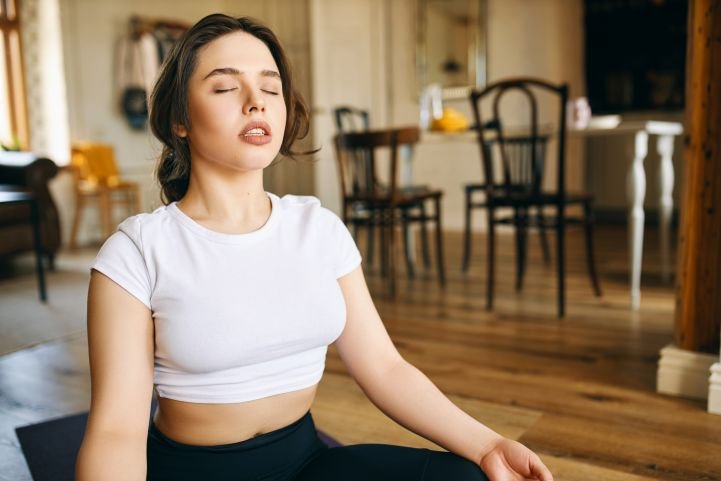
Not all breathing exercises have the same effect—each technique influences the body slightly differently. Different breathing patterns, such as varying inhale and exhale durations, can significantly influence relaxation and stress reduction. Below are several effective methods for calming the mind and reducing stress:
Box Breathing (Square Breathing): Inhale for four counts, hold for four, exhale for four, and hold for four again. This structured rhythm is a classic breathing protocol that uses balanced exhale ratios to help regulate autonomic activity and promote relaxation. It is particularly useful in moments of high stress, as it helps steady the breath and mind simultaneously.
Pursed-Lips Breathing (Straw Breathing): Inhale gently through the nose, then exhale through pursed lips as though blowing out a candle. This slows the breathing rate, reduces shortness of breath, and naturally extends the exhalation.
Diaphragmatic Breathing: Place one hand on the belly and one on the chest. Take a deep breath, breathing deeply into the belly, allowing it to rise while keeping the chest still. This engages the diaphragm, and the practice of deep breaths promotes full oxygen exchange, deeper relaxation, and can help activate the parasympathetic nervous system.
Extended Exhale Practice: Inhale for a count of four, exhale slowly for six or eight. The longer exhale and focus on exhale ratios activate the parasympathetic system, lowering heart rate and quieting the mind.
While each of these methods is effective, SKY Breath Meditation offers a holistic approach that combines cycles of breath into a single meditative process. Participants often describe a feeling of “effortless calm” following practice—a sign that the nervous system has shifted from reactivity to restoration. Slow breathing techniques and structured breathing protocols are key components of many breathing interventions, supporting relaxation and overall well-being.
The real power of breathwork comes from consistency and environment. To experience full benefits and maximize relaxation, treat your breathing practice like a daily ritual rather than an occasional remedy.
The beauty of breathwork is that it’s adaptable. Whether you’re in a meeting, sitting in traffic, or winding down at night, a few long exhales can anchor you in the present moment. Over time, this conscious breathing becomes second nature—a built-in mechanism for calm.

Emotional well-being and respiration are intimately connected. When anxious, we tend to breathe rapidly and shallowly; when relaxed, breathing slows and deepens. This simple observation reveals how strongly mental health and respiratory patterns influence each other. Spontaneous respiration occurs naturally without conscious control, while controlled breathing techniques intentionally alter breath patterns to influence psychological and physiological states.
The relaxation response, first described by Dr. Herbert Benson at Harvard Medical School, is the biological counterbalance to the stress response. Long, slow exhales are one of the most direct ways to trigger it. Practicing SKY Breath Meditation regularly strengthens this response, allowing individuals to face daily challenges with greater composure and clarity.
In every moment, the breath offers a choice—to tense or to release, to resist or to allow. Long, mindful exhales serve as an anchor to the present, calming both mind and body. Science continues to affirm what ancient yogic wisdom has taught for centuries: through the breath, we can influence our emotional state, our physiology, and even our outlook on life.
Breathing exercises that emphasize slow, extended exhalation activate the parasympathetic nervous system, reducing stress hormones, lowering blood pressure, and improving heart rate variability. When these simple exercises are combined with a structured, evidence-based approach like SKY Breath Meditation, the results deepen into lasting well-being—mental clarity, emotional balance, and renewed vitality.
Over time, regular breathwork practice can transform how you relate to stress. Instead of reacting automatically, you respond with awareness. Instead of holding your breath through life’s pressures, you exhale with ease and trust. The breath becomes both your teacher and your sanctuary.

Your breath is always with you—quiet, steady, and profoundly transformative when used with awareness. By simply lengthening your exhale, you can dissolve tension, steady your thoughts, and return to balance within moments. Over time, this practice shifts from a stress-relief technique to a way of living—anchored, mindful, and vibrant.
Through SKY Breath Meditation, individuals across the world are rediscovering the power of conscious breathing to restore well-being, resilience, and joy. Every exhale becomes a release; every inhale, a renewal. In the rhythm of your breath lies the key to peace.
Join an Art of Living Part 1 Course to learn SKY and enjoy all the benefits your breath can offer.