
Relief
Feeling exhausted as a parent? Learn how to recover from parenting burnout through mindfulness, self-care, and Art of Living breathing techniques.

Updated on: 14th October 2025
Posted on: 13th October 2025
Parenting is one of life’s greatest joys—and one of its greatest challenges. Yet for many parents, the daily demands of caring for children, managing household responsibilities, and balancing work and family life can lead to exhaustion that goes beyond simple fatigue. This deeper state of depletion is known as parental burnout—a condition marked by physical exhaustion, emotional distancing, and a reduced sense of fulfillment in one’s parental role. Parental burnout shares foundational concepts with workplace burnout, as both involve chronic stress and exhaustion, but parental burnout is distinct in its causes and consequences, often tied to the unchangeable nature of parenting responsibilities.
The World Health Organization identifies burnout as an occupational condition linked to chronic fatigue and stress. Burnout is included in the International Classification of Diseases (ICD) as an occupational condition, highlighting its global recognition. Parenting, though not typically classified as an “occupation,” requires the same constant energy, vigilance, and emotional labor—often without adequate rest or recovery. Unlike occupational burnout, parental burnout presents unique challenges, as parents cannot simply take a break or leave their role, making the stressors more persistent and less escapable.
The Parental Burnout Assessment (PBA) defines four dimensions of this condition:
When burnout sets in, even rest may not feel restorative. These symptoms are often felt as both physical and emotional exhaustion, with parents sometimes feeling sick, dizzy, or emotionally depleted. Parents may experience unexplained physical symptoms, irritability, or detachment, all of which can ripple through family life. Many parents report feeling overwhelmed by the demands of parenting, especially during periods of heightened stress. While job burnout and parental burnout share symptoms such as exhaustion and emotional withdrawal, parental burnout has unique features, including the risk of emotional distress, harm to children, and feelings of entrapment that are not typically present in job burnout.
Parental burnout rarely arises from a single cause. It develops when chronic stress outweighs available coping resources. Parental stress is a common precursor to burnout, as ongoing emotional and physical demands accumulate. Prolonged stress can lead to parental burnout, resulting in emotional exhaustion and reduced parental efficacy. Contributing factors include low emotional intelligence, workplace stress, lack of family support, and societal pressures.
Some groups face even higher risk:
These risk factors can significantly affect parents, leading to both mental health issues and physical health issues. Understanding these risk factors is the first step toward prevention. Once identified, parents can take intentional steps to rebalance stress and strengthen resilience—through community support, mindfulness, and structured self-care. Protective factors, such as strong social support and work-life balance, can help buffer against parental burnout.

Social media has become a double-edged sword for modern parents. While online communities can offer connection and advice, they also fuel comparison and perfectionism. The “highlight reels” of other families create an illusion of effortless parenting—what psychologists call “the cult of the perfect parent.”
Many parents feel pressured to post curated moments of success while silently struggling behind the scenes. This pressure can heighten self-criticism, emotional exhaustion, and a sense of inadequacy.
To counter these effects, parents can:
Reducing digital noise creates space for presence—both for self-reflection and for connection with one’s children.

Self-care isn’t indulgence—it’s essential maintenance for parents’ well-being. Regular practices such as exercise, meditation, and spending time in nature help regulate stress hormones, replenish energy, and restore emotional balance. Engaging in leisure activities is also crucial, as these allow parents to relax, rejuvenate, and manage stress, serving as a protective factor against burnout.
When parents invest in self-care, they model balance and self-respect for their children. Activities that nourish body and spirit—like journaling, painting, yoga, or deep breathing—strengthen emotional resilience. Emotional support from family and friends further helps parents build resilience and cope with stress.
The Art of Living recommends simple yet transformative tools such as SKY Breath Meditation (Sudarshan Kriya Yoga) to manage stress and restore mental clarity. This rhythmic breathing practice helps parents shift from survival mode to connection and calm.
Confidence in parenting comes from both instinct and learning. Developing effective skills—such as positive discipline, emotional validation, and mindful communication—reduces conflict and fosters trust within the family. However, stress and burnout can negatively impact the parenting role, making it harder to maintain patience and emotional connection with children.
Attending parenting workshops, support groups, or family therapy can provide strategies for handling tantrums, setting boundaries, and managing one’s own emotional triggers. As parents build competence, they feel less overwhelmed and more fulfilled, reducing their vulnerability to burnout. Still, feeling exhausted can undermine one’s parental role and effectiveness, making it important to address exhaustion as part of maintaining parental well-being.
One of the most powerful antidotes to burnout is self-compassion—the practice of treating oneself with the same kindness one offers a loved one. Self-compassion is an essential quality of a good parent, not just a perfect one.
Instead of spiraling into guilt or shame over perceived failures, self-compassion allows parents to pause, breathe, and remind themselves: “I am doing my best.” This mindset fosters inner resilience and emotional safety.
Parents who practice self-compassion also model emotional intelligence for their children, showing them that mistakes are learning opportunities—not proof of inadequacy.

Prioritizing well-being is not just a luxury for parents—it’s a necessity, especially when facing the challenges of parental burnout. When parents experience overwhelming exhaustion, emotional distancing, or a sense of being an ineffective parent, it’s a clear signal that their well-being needs attention.
Taking care of yourself is the foundation for caring for your family. Simple acts of self-care—like enjoying a favorite leisure activity, practicing self-compassion, or taking a mindful pause—can help restore energy and reduce stress. Sharing household tasks with a co-parent or family member, or reaching out for social support, can lighten the load and foster a sense of connection.
Recognizing the early signs of parental burnout is key. Tools like the Parental Burnout Assessment can help parents identify emotional exhaustion, emotional distance, and other risk factors before they escalate. If you notice persistent feelings of depletion or detachment, don’t hesitate to seek support from a mental health professional. Asking for help is a sign of strength, not weakness.
Problem-solving skills and proactive planning can also make a significant difference. For single parents or those with limited support, even small changes—like scheduling short breaks or connecting with other parents—can help buffer against chronic stress. Remember, prioritizing your well-being is not selfish; it’s essential for sustaining a healthy, joyful family life.
By making well-being a priority, parents can reduce the risk of burnout, improve their mental and physical health, and create a more balanced, compassionate home environment. Taking these steps not only benefits you but also sets a powerful example for your children about the importance of self-care and resilience in everyday life.
Well-being is multidimensional—it encompasses physical, emotional, and mental health. Parents can strengthen each of these pillars by:
The stronger the parents’ overall well-being, the better equipped they are to nurture healthy family dynamics and emotional stability at home.
Asking for help is not a weakness—it’s wisdom. Many parents suffer in silence, fearing judgment or stigma. Yet professional guidance from a therapist, counselor, or parenting coach can help identify patterns, build coping strategies, and create sustainable routines for recovery. If you are experiencing burnout, it is important to seek professional help to address these challenges and support your well-being.
Signs that it’s time to seek help include:
Taking the first step toward support can transform not only a parent’s life but the well-being of the entire family. If you are experiencing burnout or mental health challenges, seek professional support to ensure you get the help you need.

Humans are wired for connection. A strong social support system—friends, extended family, or parenting groups—acts as a protective buffer against stress.
Social support provides:
Social support systems play a significant role in preventing parental burnout by providing resources and connections that reduce stress and promote well-being.
Community-based organizations like the Art of Living Foundation also offer inclusive spaces for parents to rejuvenate through guided meditation, breathwork, and service opportunities that foster connection.
The myth of the perfect parent is one of the greatest sources of burnout. The truth? Parenting is messy, unpredictable, and beautifully imperfect.
Letting go of unrealistic expectations allows parents to breathe again—to embrace the learning process and accept that growth often comes through mistakes.
By replacing perfectionism with presence, parents rediscover joy in small moments and connection over comparison.
Burnout can create emotional walls between parents and children. Recognizing this early is key. Signs may include irritability, lack of empathy, or a feeling of emotional numbness. Parental burnout can negatively affect kids’ emotional well-being and development, leading to increased emotional distance and impacting the child’s growth. When parents are emotionally distant or burnt out, the risk of child maltreatment also increases, as stress can lead to less patience and more punitive responses.
To rebuild closeness, parents can:
These simple acts rekindle connection and remind parents why maintaining a strong connection with their children is essential for both the parent’s and the child’s well-being, and how a supportive environment benefits the child’s development.
A supportive environment starts with structure, boundaries, and open communication. Clear routines provide predictability for children, while boundaries protect parents’ time and energy. Raising children comes with both rewards and challenges, and the demands of parenting can significantly impact the family environment.
Family meetings, gratitude rituals, or even shared breathwork practices can strengthen unity. When parents prioritize their well-being, they create a ripple effect of calm and stability throughout the household.
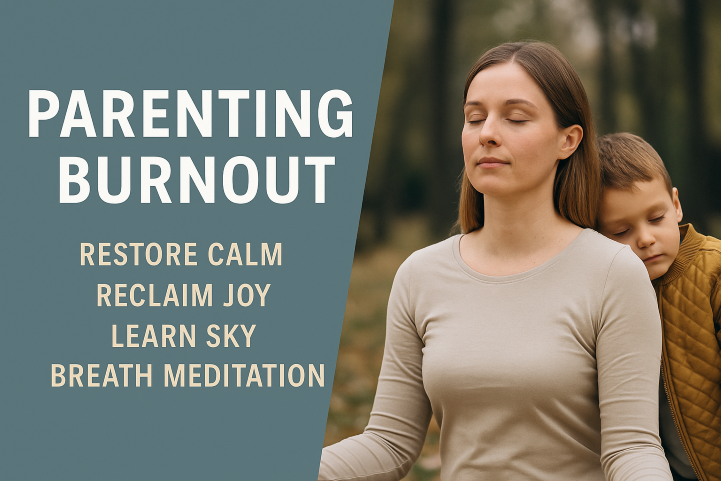
The Art of Living Foundation offers transformative programs that empower parents to prevent and recover from burnout by nurturing inner peace and vitality:
These practices not only reduce stress but reconnect parents with joy, presence, and purpose—qualities that naturally flow into family life.
Parenting burnout is not a personal failure—it’s a sign that something deeply human needs attention. By understanding its causes, setting healthy boundaries, and investing in self-care and social support, parents can move from survival mode to genuine connection and joy.
If you’re feeling depleted, take a breath. Begin with one small act of care today—perhaps five minutes of conscious breathing, a walk in nature, or reaching out to a friend.
To learn more about evidence-based techniques to restore calm and vitality, register for the Art of Living Part 1 Course with SKY Breath Meditation.
Rediscover peace within yourself—and you’ll find it reflected in your children’s eyes.
Reclaim your calm and connection.
Discover how SKY Breath Meditation can help you restore balance and joy in parenting.