Uncategorized
Boost energy, reduce stress, and sharpen focus with a simple morning yoga routine and breathing exercises. Perfect for busy Americans.

Updated on: 14th September 2025
Posted on: 14th September 2025
Mornings shape the rhythm of your day. For many busy Americans, the early hours are filled with rushing—hitting snooze, grabbing coffee, scanning emails, or preparing for family and work responsibilities. While these habits may feel unavoidable, they often leave you drained before the day has even started.
This is where a morning yoga routine makes a profound difference. By dedicating even 5–15 minutes to mindful movement and breathing, you can transform your mornings from chaotic to calm. Yoga doesn’t require expensive equipment or a long-term commitment—just a yoga mat or comfortable floor space.
Here’s why more Americans are turning to yoga in the mornings:
If you struggle with finding motivation, remember: a short daily ritual is more effective than a long, irregular practice. Whether it’s three minutes of breathwork, a 10-minute yoga sequence, or a full 30-minute flow, the key is consistency.
Setting up a quiet yoga corner at home—a dedicated mat, a candle, or even a small plant—helps signal to your mind that it’s time to slow down and focus inward. Over time, this ritual becomes a habit, and your mornings begin to feel less rushed and more intentional.
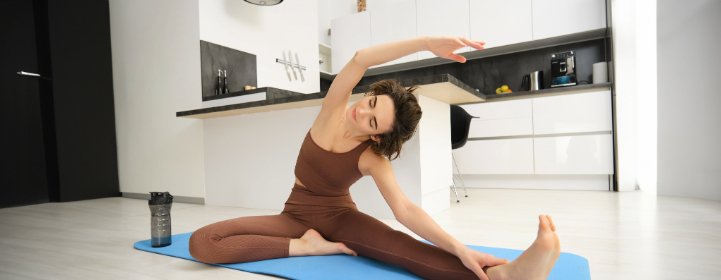
Breathing is life, but most of us do it unconsciously and shallowly—especially under stress. Incorporating breathing exercises into your morning yoga routine shifts your body and mind instantly. Known as pranayama in yoga, these techniques regulate energy, calm the mind, and prepare you to face the day with clarity.
Unlike physical yoga poses, pranayama can be practiced almost anywhere—sitting at your desk, on your couch, or even during your commute. This makes it one of the most accessible tools for busy Americans looking to build healthier habits.
Here are five beginner-friendly breathing techniques to energize your morning:
How to do it: Sit or lie comfortably. Place one hand on your chest and the other on your belly. Inhale slowly through your nose, letting your belly expand. Exhale gently, feeling your belly fall.
Benefits: This technique activates the parasympathetic nervous system, reducing stress and calming your mind. It also improves oxygen exchange, which boosts energy and mental clarity.
Best for: Starting the day with calm focus.
How to do it: Sit upright. Use your right thumb to close your right nostril and inhale through the left. Close the left nostril with your ring finger, exhale through the right. Continue alternating.
Benefits: Balances both hemispheres of the brain, restores mental equilibrium, and reduces anxiety. Many practitioners find it clears mental fog and helps with decision-making.
Best for: Centering your mind before work or study.
How to do it: Inhale for a count of 4, hold for 4, exhale for 4, hold for 4. Repeat for several rounds.
Benefits: Used by athletes and even Navy SEALs, this method improves concentration, lowers blood pressure, and provides steady calmness under stress.
Best for: Preparing for a demanding or stressful day.
How to do it: Sit tall. Inhale deeply, then exhale forcefully through the nose in short bursts, pulling the belly inward with each exhale. Inhalations happen passively.
Benefits: Invigorates the body, clears sinuses, boosts alertness, and helps fight morning sluggishness.
Best for: Gaining a quick burst of energy without coffee.
Practicing these techniques for just 5 minutes each morning can dramatically improve how you feel. You’ll notice not only physical benefits but also an emotional reset—less anxiety, more focus, and a stronger sense of control over your day.
If you’re new, start with deep belly breathing for one week, then gradually add other techniques as you feel more comfortable. Over time, you’ll develop your own rhythm and discover which practices work best for your body and lifestyle.
The fifth option works well as a standalone technique.
How to do it: This beginner-friendly breathing technique can only be learned on an Art of Living program, like the Part 1 Course.
Benefits: Sets you up for a calmer, more focused, and stress-free flow for your day.
Best for: A daily practice that builds benefits over time.

Designing a morning yoga practice doesn’t have to be complicated. The goal is to create a daily yoga ritual that feels achievable, energizing, and sustainable. Even 10 minutes of yoga can transform your morning if done consistently. Think of it as pressing the “reset” button for your body and mind before stepping into the busyness of the day.
Here’s a framework for a 10–20 minute morning yoga sequence you can follow:
Start by grounding your mind and body through breath. Choose one of the morning breathing exercises described earlier (deep belly breathing, alternate nostril, or box breathing).
This step prepares your nervous system and helps you cultivate presence before movement.
Your body is stiff after sleep, so it’s important to awaken it gradually. These simple yoga poses for mornings will loosen muscles and improve circulation:
Once warmed up, move into dynamic yoga flows that awaken energy and strength. These are excellent for busy Americans who want both physical and mental benefits:
These movements bring you into alignment physically and mentally, creating a sense of grounded energy.
After energizing postures, it’s important to return to stillness:
Even one minute of closing meditation can dramatically improve your mindset for the rest of the day.
A morning yoga routine for beginners doesn’t have to be perfect—it just has to be consistent. Over time, you’ll notice your body feels lighter, your mind calmer, and your mornings less rushed. This routine becomes not just an exercise but a grounding ritual that sets the tone for the entire day.

One of the most transformative aspects of yoga is its ability to strengthen the mind-body connection. Unlike many forms of exercise that focus solely on physical fitness, yoga blends mindful breathing, intentional movement, and meditation to bring harmony to both body and mind. This integration helps reduce stress, increase self-awareness, and enhance overall well-being—qualities that are particularly valuable for busy Americans navigating fast-paced lives.
Morning pranayama (breathwork) is more than just an energy boost—it is a scientifically backed way to support mental clarity and emotional health:
These techniques demonstrate how breathing exercises for morning clarity work on both a physical and psychological level.
Modern research supports what ancient yogis have practiced for centuries: yoga and breathwork improve both physical and mental health. Some key findings include:
While yoga postures (asanas) strengthen the body, meditation strengthens the mind. Incorporating even a few minutes of meditation into your morning yoga routine deepens the mind-body connection by:
For beginners, simply sitting quietly after yoga and observing your breath is enough to create lasting benefits. Over time, this practice trains your mind to stay calm under pressure and present in each moment.
For a deeper, more profound meditation experience, learn SKY Breath Meditation. Adding just 10 to 20 minutes of SKY can increase your energy, yielding more productivity for your busy life.
Bottom line: The mind-body connection cultivated through morning yoga and breathing rituals isn’t just a spiritual concept—it’s a scientifically supported practice that reduces stress, sharpens focus, and creates balance. By starting your day with intentional breath and movement, you create a ripple effect that carries into every area of your life—work, relationships, and personal well-being.
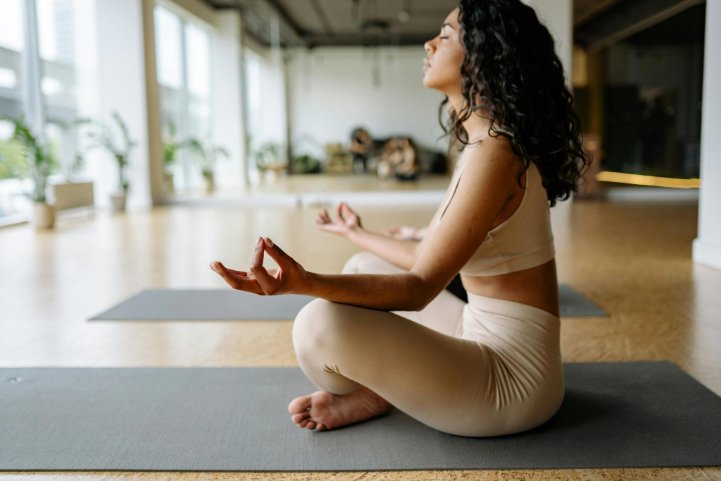
When your alarm rings and you’re tempted to hit snooze, your breath can become your most powerful tool for waking up naturally. Unlike coffee, which provides a temporary jolt, energizing breathing techniques help regulate oxygen flow, stimulate the nervous system, and sustain energy throughout the day.
Here’s a closer look at the best breathing practices for busy Americans looking to boost vitality in the morning.
Why it works: Most people breathe shallowly into the chest, which keeps the body in a low-level stress state. Deep belly breathing fully engages the diaphragm, increasing oxygen intake and calming the nervous system.
How to do it:
✅ Best for beginners and as a warm-up before more advanced techniques.
Why it works: Balances energy between the left and right hemispheres of the brain. It clears mental fog, reduces stress, and leaves you feeling centered yet alert.
How to do it:
✅ Best before work or study for improved focus and calm energy.
Why it works: Used by Navy SEALs and athletes, this method slows the heart rate, improves focus, and resets your nervous system. Great for those with morning anxiety or racing thoughts.
How to do it:
✅ Best before morning meetings or when you feel mentally scattered.
Why it works: This energizing practice literally means “skull shining.” It stimulates circulation, clears the sinuses, oxygenates the brain, and awakens your whole system.
How to do it:
⚠️ Avoid if pregnant, recovering from surgery, or experiencing high blood pressure.
✅ Best as a natural energy booster instead of coffee.
For busy mornings, here’s a quick sequence combining these techniques:
This short practice offers a comprehensive reset, calming, balancing, focusing, and energizing your body and mind.
Alternatively, you could do just five minutes of Bellows Breath. This is another breathwork method included in the Art of Living Part 1 Course.
Why it works: Bellows Breath uses a vigorous inhalation and a forceful exhalation, which energizes the mind and body. Each breath captures subtle life force energy and eliminates stress and toxins. Bhastrika is commonly called ‘yogic cappuccino’.
How to do it: If you want to start right now, check out this video demonstrating slow-paced bhastrika pranayama from the Art of Living Retreat Center.
⚠️ Avoid if pregnant, recovering from surgery, experiencing high blood pressure, or too close to bedtime.
✅ Best as a natural energy booster instead of coffee. Excellent for reducing unwanted thoughts.
✨ By practicing these breathing exercises each morning, you set yourself up for more focus, less stress, and a calm yet energized flow throughout the day.
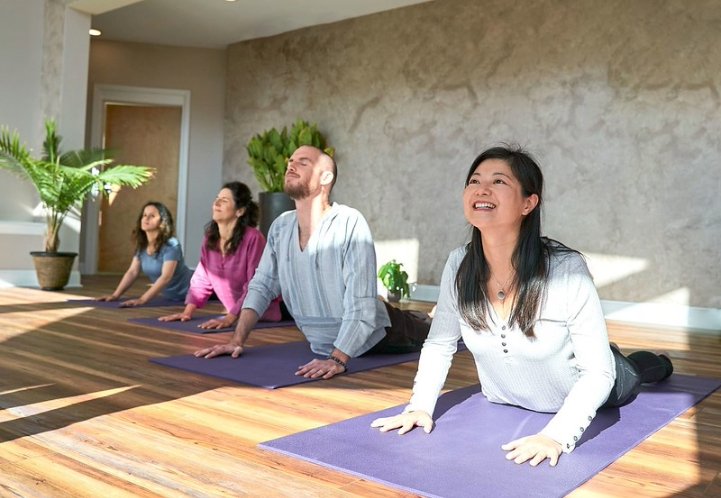
Many Americans juggle long commutes, demanding jobs, and busy family lives, leaving little time for self-care. The good news is that you don’t need an hour-long class to feel the benefits of yoga. Just 10 minutes in the morning can reduce stress, increase focus, and provide lasting energy for the day ahead.
By combining gentle stretches, intentional breathwork, and short meditation, you create a sustainable routine that fits into even the busiest lifestyle.
Here’s a step-by-step sequence you can practice at home. No equipment is needed—just a yoga mat or even a carpeted floor.
✅ Benefits: Loosens the spine, improves circulation, and gently wakes up the body.
✅ Benefits: Stretches the back, shoulders, and hamstrings while boosting circulation.
✅ Benefits: Relieves tension in the back and calms the nervous system.
✅ Benefits: Opens the hips and chest, energizes the lower body.
✅ Benefits: Builds strength, stability, and focus.
✅ Benefits: Improves digestion and relieves stiffness.
✅ Benefits: Calms the mind, sharpens focus, and sets a positive tone for the day.
✨ With this 10-minute morning yoga and breath routine, you’ll feel calmer, more focused, and energized before your day even begins. It’s a sustainable practice that doesn’t demand much time but delivers lasting benefits.

The best time for morning yoga is before breakfast, ideally right after waking up or showering. Practicing on an empty stomach allows for more effortless movement, deeper stretches, and better focus. For busy Americans, even a 10-minute yoga flow before coffee or work can make a big difference. Early morning practice also aligns with your body’s natural rhythms, helping you feel more energized, focused, and calm throughout the day.
There’s no single rule, but consistency matters more than duration. Beginners can start with 5–10 minutes of gentle yoga and breathing exercises. As you build the habit, you may extend your practice to 20–30 minutes. Even short sessions improve flexibility, reduce stress, and boost mental clarity. The key is making morning yoga a daily ritual, not a one-time workout.
Adding pranayama (breathing techniques) to your yoga routine enhances both physical and mental well-being. Deep breathing:
Techniques like alternate nostril breathing, box breathing, and skull shining breath are especially effective in the morning.
Staying motivated is all about creating a sustainable habit. Here are some tips:
Beginners often face hurdles like a lack of time, stiffness, or wandering thoughts. Here’s how to manage them:
✅ Remember: The hardest part is showing up. Once you begin, even a short session creates benefits that carry into the rest of your day.
For busy Americans, mornings set the tone for the rest of the day. A morning yoga and breathing routine offers a powerful way to reduce stress, sharpen focus, and increase energy.
Whether you have five minutes or 30, practicing morning yoga for beginners or advanced flows can help you create balance in a hectic world.
Find your flow, breathe deeply, and start your day with intention.

If you’ve experienced the benefits of a short morning yoga and breathing ritual, imagine what’s possible with a guided program designed to transform your energy, focus, and resilience. The Art of Living Part 1 Course introduces you to the life-changing SKY Breath Meditation—a powerful technique backed by research to reduce stress, boost immunity, and bring calm clarity to your day.
✨ Whether you’re a beginner or looking to deepen your practice, this course gives you the tools to build a sustainable routine that fits into even the busiest schedule.
👉 Start your journey today and discover how just a few minutes of breath and movement can reshape your mornings—and your life.