Relief
Conquer health anxiety with proven strategies, CBT, and SKY Breath Meditation. Learn how to stop obsessive health worries and restore inner peace.

Updated on: 3rd October 2025
Posted on: 3rd October 2025
Health anxiety, also known as illness anxiety disorder, is more than occasional worry about your health. It is a persistent and overwhelming fear of being ill or getting ill—even in the absence of severe symptoms. This condition can impact every aspect of daily life, eroding peace of mind, straining relationships, and disrupting work or study.
People with health anxiety may feel trapped in a cycle of worry and reassurance-seeking: a minor bodily sensation is misinterpreted as a severe illness, triggering panic, which in turn leads to frequent doctor visits, online symptom checking, or avoidance of everyday activities.
The Diagnostic and Statistical Manual of Mental Disorders (DSM-5) formally recognizes health anxiety as an identifiable condition, closely related to obsessive-compulsive disorder (OCD). Just like OCD, health anxiety thrives on compulsive behaviors (e.g., repeated body checks or “Googling symptoms”) and obsessive thoughts about illness. Without intervention, this cycle becomes self-reinforcing.
Yet the good news is: recovery is absolutely possible. With evidence-based therapies, self-help strategies, lifestyle practices, and powerful techniques like SKY Breath Meditation, individuals can break free from constant fear and regain calm clarity.
Health worries are universal. Everyone occasionally fears disease when experiencing pain or strange symptoms. However, when these worries are disproportionate, chronic, and resistant to reassurance, they cross into the territory of health anxiety disorder.
Initially, a person may worry about a symptom and consult a doctor. But instead of reassurance calming the fear, the mind soon shifts to another worry. Over time, even normal bodily sensations (heart palpitations, fatigue, digestive changes) can feel threatening.
Recognizing this process helps individuals begin to separate the symptom from the story.
Health anxiety overlaps with several related mental health conditions:
Mental health professionals use the DSM-5 framework to diagnose and treat these conditions. Approaches like Cognitive Behavioral Therapy (CBT) are highly effective because they help patients challenge catastrophic thinking and reduce compulsive behaviors.

Recognizing health anxiety early can prevent it from spiraling. Key signs include:
Health anxiety not only drains emotional energy but also isolates individuals from relationships, work, and life opportunities.
Health anxiety is treatable. The most effective approaches include:
Breath-based interventions: Evidence shows that SKY Breath Meditation helps regulate the nervous system and reduces anxiety at the physiological level
Empowering yourself with simple practices can make daily life much easier:
Mind-body practices: Yoga, tai chi, and SKY Breath Meditation help retrain the nervous system to feel safe.
One of the most significant costs of health anxiety is avoidance. Recovery involves intentionally re-engaging with life.
Over time, these steps create momentum, shifting focus away from illness toward living.
Preventing relapse and ensuring long-term recovery requires addressing the roots of anxiety:
Holistic wellness: Sleep, balanced nutrition, exercise, and emotional self-care strengthen resilience
Among the most powerful tools for recovery is SKY Breath Meditation (Sudarshan Kriya Yoga)—a structured breathing practice taught by the Art of Living Foundation.
Unlike standard mindfulness, SKY directly engages physiology through rhythmic breathing cycles (slow, medium, and rapid). This calms the amygdala (the brain’s fear center), enhances prefrontal cortex activity, and activates the parasympathetic nervous system.
For health anxiety, SKY offers three direct benefits:
Practiced daily, SKY shifts the baseline state of mind from hyper-vigilance to calm presence.
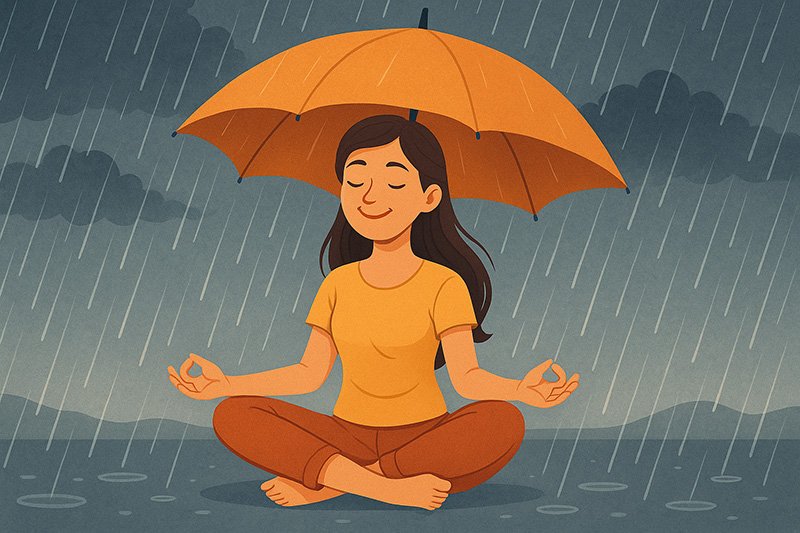
Health anxiety can feel like a relentless storm, keeping you trapped in a cycle of worry, checking, and fear. But like all storms, it eventually passes—and with the right tools, you can step out into clear skies much faster. Recognizing health anxiety as a condition—not a personal weakness—is the first and most empowering step. From there, evidence-based therapies, practical self-help strategies, and lifestyle practices can begin to loosen its grip.
Yet true transformation goes beyond symptom management. Practices like SKY Breath Meditation enable you to calm your nervous system, restore emotional balance, and cultivate inner resilience to face uncertainty with confidence. With consistent practice, the body and mind learn a new baseline: instead of fear and hyper-vigilance, peace and clarity become your natural state.
You don’t need to live in fear of every sensation, every symptom, or every “what if.” With the proper support and tools, health anxiety can shift from being the center of your life to just one small ripple in the background. Freedom from worry is not only possible—it’s within your reach.
If health anxiety has been holding you back, now is the time to take gentle but decisive action. Here’s what you can do today:
The path forward is not about eliminating all worries, but about learning to live with greater peace, trust, and freedom. By combining therapy, lifestyle practices, and the transformative power of breath, you can reclaim your life from the grip of health anxiety and move toward a brighter, calmer future.
Join a SKY Breath Meditation course with the Art of Living Foundation and experience how powerful, guided breathwork can restore your inner peace and resilience. Join a SKY course → here.
Q: How can I tell if my worry is normal or health anxiety?
A: If reassurance from doctors doesn’t reduce your worry, and symptoms dominate your thoughts, it may be health anxiety.
Q: Can SKY Breath Meditation replace therapy?
A: SKY is highly effective but works best when combined with professional guidance for deeper, lasting recovery.
Q: How long before I feel relief?
A: Many participants report feeling calmer after their first SKY session, with deeper results after consistent daily practice.
Q: Is medication always required?
A: Not necessarily. Many people manage symptoms with CBT, SKY, and lifestyle changes alone. Medication is a helpful option for severe cases.