The Timeless Quest for Inner Peace
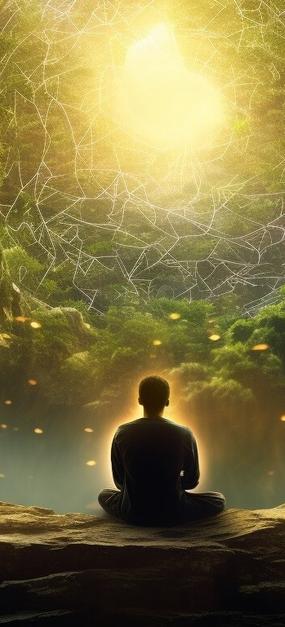
“Rest in peace” is not just something we wish for the departed; rather, it’s a state of mind we long for while we’re still alive. For centuries, humans have chased this inner calm, and meditation has been one of the most trusted paths to reach it. The old belief that meditation is only for the elderly or that one must escape to the mountains is long gone. Today, whether you’re a student, a working professional, a parent, a scientist, an athlete, or a farmer, meditation remains a universal practice—open to anyone, regardless of age, gender, or profession.
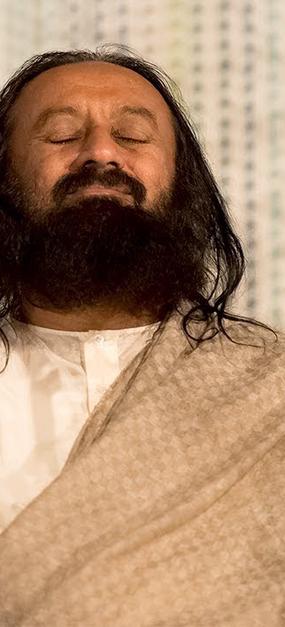
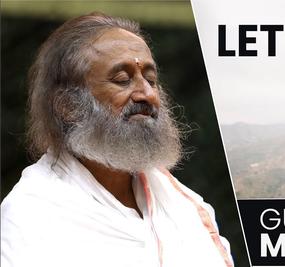
The Art of Living, under the guidance of Gurudev Sri Sri Ravi Shankar and supported by millions of dedicated volunteers, has revived this ancient tradition, blending the best of timeless wisdom and modern convenience.
Consciousness is very ancient; the mind is older than the stones.
Gurudev Sri Sri Ravi Shankar
Meditation in Ancient Civilizations

The art of meditation was discovered as a result of humans’ longing to experience inner peace and clarity. The roots of meditation run deep in Indian civilization, even before recorded history. The earliest references to meditation are found in ancient Indian scriptures like the Vedas and the Upanishads, where Vedic Rishis (sages) practiced a deep state of silence and experienced what can be called knowledge downloads, that is, the knowledge was revealed to them.
The same concept of meditation was explored and practiced across different cultures in different ways. In Buddhism and Jainism, the concept of a meditative state was conveyed by emphasising discipline, compassion, self-observation, non-violence, and mindfulness. In East Asia, Taoism and Zen practitioners practiced meditation by observing the ‘Qi’, that is, the natural flow of life or the vital energy. Greek philosophers like Plato or Pythagoras and Egyptian mystics like Hermetics contemplated that breath has spiritual powers and how one must withdraw their mind from outer senses to experience inner silence.
Gurudev reminds us that mediation is a universal phenomenon and that it is very much applicable to any person living in any country.
Meditation in the Mainstream
The Europeans, like Alexander (in the BC era), and many such travellers of the West who landed in India, were captivated by the ancient wisdom, meditative practices, and traditions. Fast-forwarding to the 19th & 20th centuries, the world saw major revolutions, world wars, and giant leaps in technology. In such times of trial and change, Eastern scholars like Paramahansa Yogananda and Maharishi Mahesh Yogi introduced Yoga and transcendental meditation to the West. Their work led to more awareness around meditation, followed by the beginning of research and studies on the impact of these techniques.
In today’s era, the Art of Living has spread the art of Meditation and Breathing techniques across the globe in 182+ countries. Gurudev Sri Sri Ravi Shankar has played a key role in making these ancient meditation techniques accessible and practical for people around the world. He has brought practices once reserved for monasteries and mountains into the mainstream, making them easily accessible in daily life. Last year, the UN recognised and declared 21st December as “World Meditation Day”. Gurudev led the inaugural WMD celebrations at UN headquarters and later guided a record-breaking online gathering into a tranquil meditation.

Today, meditation has been integrated into daily wellness practices and is a highly recommended practice to be included in everyone’s daily routine. Wellness practitioners like doctors, therapists, counsellors, psychiatrists, gym instructors, sports coaches, etc, recommend their patients to integrate the practice of meditation for holistic recovery and well-being.
The Science Behind Ancient Practices
The ancient practices were formulated with careful observations and considerations of human behaviour. It was then simplified so that people from all backgrounds could practice and benefit from it. All the ancient practices, including pranayamas (breathing techniques) and meditation, have been a subject of research for scientists across the world for several years now. A few highlights of research on meditation are as follows (all the detailed research papers and references can be found at https://ssiar.org/):
1. Impact on the Brain and Nervous System
Clinical trials show that meditation lowers the cortisol(stress hormone) levels and decreases activity in the amygdala (the brain’s centre for fear and stress). The amygdala shrinks in size over time, while the gray matter (the brain’s centre for memory, empathy, and self-awareness) increases, fostering calmness. MRI scans also show that meditation increases activity in the prefrontal cortex, therefore, enhancing one’s attention, planning, responses, and decision-making. This balance helps regulate emotions and sleep. It also lowers anxiety, depression, and rumination. Thus, it promotes the overall emotional, social, and mental health of regular practitioners.
2. Impact on Physical Health
Studies conclude that meditating regularly strengthens the immune system due to increased antibody response and better inflammatory markers. Breathing techniques coupled with meditation are found to activate the parasympathetic nervous system, thereby lowering heart rate and blood pressure. Practices like mantra meditations have shown reduced sensitivity to chronic pain.
Gurudev says that there are five paths to attain a meditative state. They are through physical or emotional exertion, sensory pleasures, breathing exercises, or knowledge. For example, let’s see how breath and mind are connected. Have you noticed how you breathe when you are angry, or excited, or sad, or very relaxed? As you are reading, just observe how you are breathing. A director of a play/movie asks you to breathe faster when you have to show anger. If you have to show a serene scene, the director would tell you to breathe more softly and more slowly.
There is a certain rhythm to our breath. And if one cannot handle the mind directly, one can do that through the breath. In fact, Gurudev has provided a very powerful breath technique called Sudarshan Kriya (often referred to as SKY). He says that people complain that they don’t have time and just can’t meditate, but they certainly can breathe. Journal of Clinical Psychiatry states that SKY helps fight major depression. A study from Indian Journal of Health and Well-being shows that SKY enhances comprehensive well-being owing to reduced stress, improved sleep, and increased satisfaction.
If we understand the rhythm of our breath, we are able to have a say over our minds. We can win over any negative emotions like anger, jealousy, and greed, and we are able to smile more from our hearts.
Meditation in the Age of Technology

A notification beep, buzz, vibration, and your hand runs to your phone to check. People have got attuned to using phones as a way to escape reality, to comfort themselves, whether they are eating, travelling, or are in the toilet. The digital world provides convenience but also distracts people from their focus, reducing the global average attention span to less than half a minute. This has given rise to stress, anxiety, and many such mental health issues. Almost every 43 seconds, a person commits suicide in the world. Mental health issues are far more common today than they were in previous decades.
With AI coming to the fore, people are under a lot of pressure to upgrade their skills to be able to survive in the competitive job market. Amidst these testing times, creating a lot of internal noise, the need for silence is greater than ever.
On the flip side, the same technology that has made meditation a necessity for mental well-being has also facilitated millions of people coming together to meditate. For instance, the first World Meditation Day on 21 December 2024, introduced and led by Gurudev, broke six world records, bringing together 8.5 million people from over 180 countries to meditate online and offline.
The Eternal Relevance of Stillness
Meditation links the wisdom of the past to the possibilities of the future by anchoring us in the present — the only moment in which real transformation can happen. Ancient meditators discovered that beneath the changing currents of thought and emotion lies a timeless core of silence, clarity, and consciousness; meditation allows us to access that same core, carrying forward the inner harmony and insight of our spiritual heritage into modern life. By calming the mind and quieting the constant chatter between what was and what might be, meditation becomes a doorway: past mistakes and future anxieties lose their power, and we meet life with clarity, stability, and purpose. In this way, the practice acts as a bridge — preserving the depth of ancient traditions while preparing the mind and heart to respond creatively to the challenges of tomorrow.
Ready to begin your own journey of inner peace through the practice of meditation? What better day than World Meditation Day? Come join us as the globe comes together as a single family to meditate, to cleanse it from the inside out, and make it a better place.
Connect traditional teachings with everyday practice through what meditation is and how to begin and a closer look at the power of meditation.