Forty years ago, the Art of Living International Centre was nothing more than a stretch of dry, rocky land, far from the city's bustling life. There were no trees, no water, just an empty, quiet space. Today, it’s a lush, vibrant oasis, filled with greenery and buzzing with life.
This beautiful transformation wouldn’t have been possible without the vision of Gurudev Sri Sri Ravi Shankar. He envisioned creating a peaceful place where people could step away from the noise of daily life and find calm in the embrace of nature. It was brought to life through the tireless dedication of countless volunteers worldwide, who poured their hearts into turning this barren land into the thriving sanctuary it is today.
As you walk through the Ashram now, you’ll find yourself surrounded by peaceful trails that wind through a rich blend of trees, shrubs, birds, butterflies, and bees. You’ll also discover rare and endangered species like Black Dammar, Indian Kino, Red Sanders, Rosewood, and Sandalwood, which stand as a beautiful reminder of what care and dedication can create.
How it all started
One day, we packed ourselves into our father’s white ambassador and set off on a drive to search for an ideal spot for the Ashram. We drove towards south Bangalore, which was yet to be urbanized, along Kanakapura road, lined on both sides with towering, beautiful trees. Ours was the only vehicle on the road which was bordered by woods. We would have driven about thirteen kilometers when Gurudev asked my father to stop the car. To our right, we could see some hillocks, bare and reddish in hue. We alighted and followed Gurudev on foot towards the hillocks. He took a few steps on the land and said, “This is it.
In the early days, the Ashram was home to just a few residents, mostly volunteers who had come from the USA and Europe. One of their first tasks, guided by Gurudev, was to plant trees. It wasn’t easy, water had to be carried from over 2–3 kilometers away just to keep the young saplings alive. A lot of effort and time was invested in planting and nurturing the saplings. Today, Neem and Coconut trees, among many other species, are sprouting on their own, all over the Ashram.
As the hills turned green and the trees flourished, nature responded in its way. Birds started arriving, insects buzzed back into the ecosystem, and the Ashram slowly transformed into a vibrant sanctuary for all forms of life.
People often say that places filled with meditation, sacred chants, and rituals like Pujas and Homas hold a special kind of energy. These positive vibrations seem to nurture life itself, creating an environment where wellness and growth come naturally. It’s no wonder that animals and birds are drawn here, they seem to sense the peace and harmony that has taken root, just like the trees.
Birds
Walking through the Art of Living Ashram feels like entering a sanctuary where nature and peace embrace you. Birds and animals seem to sense this subtle energy Birds and animals seem to sense this subtle energy, choosing to call this place home, knowing they are safe.
There’s something special about places where people meditate and honor nature with Pujas and Homas—it's as if the air itself carries a sense of well-being and abundance. In such an environment, life flourishes effortlessly.
As you walk, the gentle calls of birds like the Prinia and Barn Swallow seem to weave a melody around you, setting a soothing rhythm to your steps. With over 71 bird species, each brings its own charm to this serene haven. Watching a Cattle Egret poised gracefully or a Common Myna chirping nearby is a quiet delight. Under the vast open sky, surrounded by lush greenery, you can’t help but feel grateful for the harmony and life these winged visitors bring to this sacred space.
Bees
The Art of Living Ashram is a place where nature feels alive in every breath. Strolling through its gardens, you’ll hear more than just the rustling of leaves or the chirping of birds—a soft, rhythmic hum lingers in the air. It’s the sound of bees, quietly going about their day, weaving life into the landscape.
Here, more than eight species of bees have made this place their home, each playing a unique role in keeping the ecosystem alive. Carpenter Bees carefully carve nests in wood, Dwarf Honey Bees flit gracefully from flower to flower, and the tiny Indian Stingless Bees move tirelessly, weaving through blossoms.
But their work goes far beyond gathering nectar. These tiny pollinators help fruits ripen, vegetables flourish, and flowers bloom in a riot of color. Their quiet efforts extend beyond the Ashram, supporting nearby farms and keeping nature’s cycle thriving.
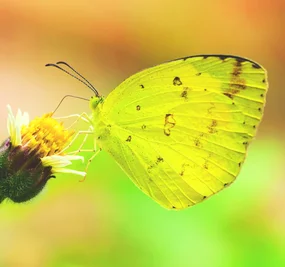
Butterflies are more than just delicate beauties; they are nature’s storytellers, reflecting the health of their surroundings. At the Art of Living Ashram, where over 102 species thrive, including the African Babul Blue, Blue Mormon, and Common Castor, these winged wonders bring life and vibrancy to every corner.
African Grass Jewel
Angled Castor
Common Grass Yellow
Common Jezebel
Often called flying flowers, they do more than add color to the landscape, they play a crucial role in nature’s balance.
Some, like the Blue Tiger and Painted Lady, travel incredible distances, carrying pollen from one blossom to another, helping plants flourish. Beyond their role as pollinators, butterflies also sustain birds, reptiles, and amphibians while naturally keeping pests in check. In their quiet and graceful way, they remind us how interconnected life truly is.
Plants and Herbs
As the Acacia plants took root, the landscape began to shift. Gardens, lawns, and meadows flourished, and soon Sandalwood, Neem, and many other varieties of trees were added. Today, the Ashram is home to 146 different plant varieties, a testament to the love and effort that has turned what was once barren land into a vibrant, thriving sanctuary.
In 1992, the Art of Living Ashram in Bengaluru was far from the lush green haven it is today. The land was mostly barren, with just a few coconut plants scattered around and grass growing here and there. The boundaries were undefined, and animals wandered freely through the area.
One day, Guruji spotted a dying banyan plant atop Sumeru Mantap. With some care and attention, the plant revived, marking the beginning of a new chapter for the Ashram. Around this time, the ashram received donations of Acacia plants. Pramila Muthanna and her team worked relentlessly, planting these trees and working with the tough, rocky soil to create something beautiful.
The Ayurvedic College Garden is a hidden gem for those who find comfort in nature’s healing touch. Spread across six acres, this lush space is designed to make medicinal plants easy to recognize by their unique features.
As you step in, fruit-laden trees arch overhead, their branches swaying gently as if to welcome you. Their sweet scent lingers in the air, setting a soothing and inviting tone for your walk through this green sanctuary. Climbing plants gracefully weave their way around well-tended structures, adding to the garden’s charm.
One of the most fascinating parts of the garden is the herbal section, home to an astounding 502 plant varieties. A dedicated 1.5-acre herb plot nurtures 173 medicinal species, while a 2-acre shrub area showcases 82 more. Special sections like the Triphala and Dashamoola plots highlight the traditional importance of these plants. There’s even a space dedicated to rare and endangered species, serving as a quiet reminder of the need to protect these botanical treasures for generations to come.