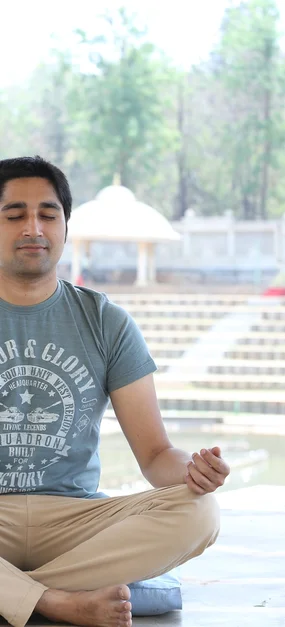


Meditation will definitely provide you with that much-needed strength to overcome anger. Practice more pranayama and go deeper into meditation. You will feel the serenity and the change in you after meditation. Meditation also helps your body. It helps you overcome stress, and it helps normalize your blood pressure.
Meditation is not just for certain types of people. It’s for everyone who wants to be happy, who wants to be creative. Meditation sharpens the mind through focus and expands the mind through relaxation. Research supports these claims, showing that yogic breathing techniques can improve well-being and vagal tone [Goldstein MR, et al. (2016)].
Why Do We Get Angry?
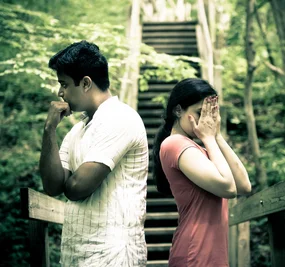
What do you get angry with? People, incidents, situations? You cannot get angry with objects. So, your anger is all directed at people or situations. You are also included in those people – either you are angry at yourself, or someone else. You feel angry because of some weakness. When you want to do something but are not able to do it, then that inability evokes anger in you. You never get angry over an ant or a fly. We get angry at someone who we think is greater or mightier than we are. Anger arises when we think that our words carry far more importance than we do. And anger does cause pain when it arises.
Desire for perfection in speech and action is often the cause of anger. Perfection in action is almost impossible. Only 95 percent perfection is possible in action. Though, perfection in speech and mind is 100 percent possible. Anger comes out of your love for perfection.
What is the frequency with which you get angry? The frequency of your anger is inversely proportional to your strength. The stronger you are, the less prone you are to anger; the weaker you are, the more prone you are to anger. You need to look at this: Where is your strength? Why are you losing it? The second factor is your vision, and your in-depth understanding of life and the people around you. This also plays a part. The third is your attachment – attachment evokes anger in you. The degree of attachment – to what you want. So, behind your anger, there is desire. You must recognize that. If it is for your comfort, desire, or ego, you have a different reaction. But if your anger is out of compassion, if your anger has a purpose to set things right, it is different. This sort of anger is not a bad emotion. Often, anger comes because you don’t accept the present moment. It is when you are exhausted and stressed that you lose your temper and get angry.
Why Anger Is Not a Sign of Strength
Many people think anger gives them force or control. But anger is not strength. It is more often a sign that the mind has lost its center. When you are centered, you don’t have to worry. You don’t have to poke into everybody’s mind and see what they’re feeling. It is not possible. Also, it’s not necessary. Be centered, and when you are centered, you are strong. And you will see there is nothing but love all around you.
You have to calm your mind down. Then you tap the source of creativity. Meditation is the deep experience of diving inside. With meditation, the stress in the system goes away, you are able to tap the source of creativity, that is yourself. You are able to create much better things. Research has shown that practices like SKY Breath Meditation significantly improve emotional regulation, which reduces anger and increases creativity [Gootjes L, et al. (2011)].
What Meditation Really Is
Meditation is the only way you can transcend negative thoughts, and then positive thoughts will come spontaneously and automatically. Stress and tension cause a negative attitude. Suppose you don’t sleep for two days; small things can irritate you. If you have rested well, your attitude will be different even in the same situation. Meditation provides the deepest rest. Meditation is not concentration. It is the opposite of concentration. If you want to drive anywhere, you need concentration. If you have to simply relax at home, there needn’t be any effort. You don’t need concentration. Meditation is deep relaxation and not concentration. Studies indicate that SKY Breath Meditation helps in managing negative emotions and promoting positive thoughts [Kharya C, et al. (2014)].
For every rhythm in the mind, there is a corresponding rhythm in the breath, and for every rhythm in the breath, there is a corresponding emotion. So, when you cannot handle your mind directly, through breath, you can handle it better. Meditation is letting go of anger from the past and the events of the past. It’s accepting this moment and living every moment totally with depth. Breathing techniques and meditation are very effective in calming the mind. Our breath has a great lesson to teach us, which we have forgotten. Research supports that these techniques are effective in improving emotional regulation, as seen in various studies [Kharya C et al. (2014); Katzman MA et al. (2012)].
How Meditation Helps You Manage Anger Better
One of the clearest signs that meditation is working is not that anger never comes, but that it does not stay the way it used to because your relationship with it changes. You start noticing sensation, breath, and movement in the mind much earlier.
Earlier, when you used to get angry, your anger would last for a long time. If you have started meditating very recently, then you would have noticed that anger still comes, but it subsides quite soon as well. In a matter of four to five minutes, your anger disappears. See this as a big step in the positive direction. When you felt angry in earlier days, when you did not meditate, your anger would last for hours, days, months, or perhaps even a year. But now that you have started meditating regularly, anger does not stay for long. Why is this so? It is because when anger comes, at that moment the attention shifts to the breath, and you remember your breath – and this helps to regulate your anger. The experience of past meditation immediately takes you back to a calm and serene state and stops the anger in its tracks. Any meditation that you do never goes to waste.
A Simple Breathing Practice to Cool Down
When anger comes and you become aware you are getting angry, observe the sensation and the breath. Often you are unable to do this because anger does not ask, “Can I come in?” It simply comes, and by then you may have already acted on it.
When you notice anger arising:
• Take five slow, deep breaths.
• Chant “Om” three times or any calming sound.
• Breathe deeply and pause for 15 seconds. Or any other sound mantra you want to chant.
• Breathe in and breathe out deeply and slowly. Take a deep breath and breathe out, then wait for 15 seconds.
If you do this, then this anger which is coming up in you, like a bubble, like a buzz, starts cooling down, coming down. This will definitely work.
When anger comes, you may feel the sensation in the forehead. Observe the sensation for a few minutes; it vanishes. This is where breath and awareness work together. A study focusing on US veterans showed that emotional dysregulation and heart rate variability improved through breathing and meditation practices [Mathersul DC, et al. (2022)].
Should You Suppress or Express Anger?
Many people assume the spiritual path means suppressing anger, but that is not what is being taught. It’s not a black-and-white rule that you should never express anger or always suppress it. If it comes as a big rush from within you and it happens, it’s out of your control.
Sometimes people do not express anger because they are fearful of the consequences, but suppressing it can make it stay longer. Instead if you express it without acting in a harmful way, then it’s finished. Take a few deep breaths and let your system cool down. There is a specific breathing technique taught in the Happiness Program to control anger. It allows you to express the anger through the breath without having to say harmful words or take actions you may regret.
What to Do After Losing Your Temper
When you do become angry and lose your temper, don’t keep regretting it, and don’t justify it either. Either you justify your anger so that it makes you feel you are right, or you feel so guilty and horrible that you start getting angry because you got angry. So that anger hatches one more anger. Because of the anger, you got angry with somebody else. Now you’re getting angry at yourself, and when you are angry at yourself, you are preparing to be angry at somebody else very soon. So what would be the best thing is to look at the sensation and see, “Oh, this has happened.” Okay, I offer it, drop it, offer it. Come to the moment. Come to the moment without justifying your anger.
Common Challenges When You Start Meditating
Some people say that for them it’s hard to meditate because they feel they have to empty the mind completely. Sometimes they feel meditation is for a certain kind of spiritual people, not for them. But meditation is not about forcing the mind to become blank. It is an effortless process. Thoughts may come. Emotions may come. What matters is that we don’t fight them. When you get angry, just observe that sensation. Observe how your teeth are clenching and how the mind becomes. Take a few long deep breaths and see if it changes.
If thoughts come during meditation, we don’t try to chase them. The more we chase them, the more they come. If you want to get rid of a thought, it won’t go easily. It will come back stronger. So we take another strategy. If bad thoughts come, we give them a hug. We shake hands with them. Then they disappear. If good thoughts come, we accept them, then they become quiet. Whatever thoughts are coming, we don’t try to stop them.
Deeper Understanding Dissolves Anger
Very often, anger stays because the mind keeps waiting for an apology, an explanation, or some closure from outside. Somebody behaves badly with you, suppose. And then if they give you a very logical explanation, your mind says, fine. Or if they come and say, “I’m so sorry,” then what happens? You’re okay with it – you cool down. Now why do you have to wait for them to come and say sorry? You can straightaway feel okay.
Do you think our mind is less valuable than this five-letter word “sorry”? Our mind is more valuable. It’s more precious than a word from somebody, a phone call from somebody saying, “I’m so sorry.” Don’t expect such words to come. Do it on your own. You will find there is more fun, and you save your mind, which is the precious thing we have.
A deeper insight into people and situations also reduces reaction. Whatever appears on the surface is not what it is. So often it needs a deeper insight into things, to look into what they are, what a situation is. With more understanding, anger loses its grip, and the mind becomes freer.
How to Start Your Meditation Practice
If you are beginning, keep it simple. Start with your breath. Start with awareness. Start with a few moments of stillness every day. You can use the guided meditation below as a start for your practice. The important thing is regularity.
Summary: Meditation Can Help You Control Anger
Anger is not always caused by the outer situation alone. Often, it comes from weakness, stress, attachment, perfectionism, exhaustion, or a lack of acceptance of the present moment. The good news is that anger can be transformed. Meditation and breathing techniques help you become aware of anger sooner, reduce how long it stays, and give you the strength to come back to yourself.
When anger comes, observe the sensation and the breath. Take a few deep breaths. Chant Om if that helps. Don’t keep regretting, and don’t justify it. Just let go and move forward. After you start practicing meditation, over time, something remarkable happens: you may still get angry, but it doesn’t stay like before. And that itself is a big achievement.
References
- Katzman MA, et al. A multicomponent yoga-based, breath intervention program as an adjunctive treatment in patients suffering from generalized anxiety disorder with or without comorbidities. 2012.
- Goldstein MR, et al. Improvements in well-being and vagal tone following a yogic breathing-based life skills workshop in young adults: Two open-trial pilot studies. 2016.
- Gootjes L, et al. Cognitive Emotion Regulation in Yogic Meditative Practitioners. 2011.
- Kharya C, et al. Effect of controlled breathing exercises on the psychological status and the cardiac autonomic tone: Sudarshan Kriya and Prana-Yoga. 2014.
- Mathersul DC, et al. Emotion dysregulation and heart rate variability improve in US veterans undergoing treatment for posttraumatic stress disorder: Secondary exploratory analyses from a randomised controlled trial. 2022.